In the twentieth century, queer individuals faced a diverse array of social, legal, and cultural challenges. Homosexuality remained criminalized well into the century—in the UK until 1967—and queer representation in public discourse was often met with censorship or moral panic. The 1970s and ’80s saw the emergence of radical LGBTQ+ activism, such as the Gay Liberation Front and ACT UP, pushing for visibility, rights, and systemic change. These movements were catalysed by the AIDS crisis of the 1980s, which disproportionately affected gay men and laid bare the neglect, stigma, and structural violence faced by queer communities.
Against this backdrop, queer artists used visual culture to contest marginalization and to articulate identity and belonging. As Eve Kosofsky Sedgwick argues in Epistemology of the Closet, queer subjectivity is shaped through mechanisms of concealment, silence, and resistance. Many queer artists navigated these tensions by embedding coded meanings, psychological depth, and activist intentions into their work. This paper explores how Francis Bacon, David Wojnarowicz, and Catherine Opie used their practices to reflect the evolving concerns of queer life—from repression and grief to affirmation and community.
Wojnarowicz, an American multimedia artist and outspoken activist, exemplified the use of art as political resistance. Informed by personal experience and a broader context of systemic neglect during the AIDS crisis, Wojnarowicz’s work often blurred autobiography with activism. His piece Untitled (One Day This Kid…) (1990) positions a childhood image of the artist surrounded by declarative text detailing the persecution and trauma queer youth face. The text operates as what Judith Butler might describe as a counter-discourse—reclaiming the power to name and grieve lives otherwise considered “ungrievable.” The piece highlights the socio-political forces that shape queer life from an early age and critiques the silence of institutions during the AIDS epidemic. Wojnarowicz’s work foregrounds what Sedgwick identifies as the need to make queer suffering visible, not as spectacle, but as a demand for justice and dignity. His art functions as both memorial and protest, reclaiming queer presence in a public sphere that often erased it.
Francis Bacon’s work communicates queer identity through a visual language of distortion, isolation, and psychological intensity. Working in mid-century Britain, where homosexuality was criminalized until the Sexual Offences Act of 1967, Bacon developed a uniquely visceral style that captured the existential toll of repression. In Two Figures (1953), Bacon paints two male bodies in a contorted embrace, their forms blurring the line between intimacy and struggle. The figures are framed within cage-like enclosures, echoing what queer theorists describe as the spatial and psychic constraints of the “closet.” While Bacon rarely addressed his sexuality publicly, his work, as Sedgwick might note, “says” queer without “naming” it—embodying what she calls the performative ambiguity of queer existence. His paintings expose the instability of desire, shame, and identity, reflecting how queerness, in the mid-century context, was often internalized rather than externalized.
Catherine Opie brought lesbian identity to the forefront through her photography challenging both heteronormative conventions and internal community stereotypes. In Self-Portrait/Cutting (1994), Opie presents her back with an image of a lesbian family carved into the skin—a raw metaphor for the pain and longing for inclusion in traditional family narratives. The work visually articulates the violence of exclusion while asserting a vision of queer domesticity. Opie’s series Being and Having (1991), features lesbians styled in hypermasculine drag, deliberately subverts gender binaries, echoing Judith Butler’s theory of gender performativity. Opie’s photographic practice offers an archive of lesbianism presence—centred not on trauma, but on community, visibility, and care. Her work resists the notion of a “single story” of queerness by showcasing its multiplicity.
Through their distinctive approaches—Wojnarowicz’s confrontational activism, Bacon’s psychological introspection, and Opie’s intimate visibility—these artists critically reflect the shifting issues central to queer lives in the twentieth century. Their work engages with themes explored in queer theory: the performative nature of gender, the constraints of the closet, and the politics of mourning and recognition. Collectively, they underscore how queer art became not just a mode of self-expression, but a potent strategy for resistance, redefinition, and survival in a world that often sought to erase them.
In Pig Tales (Truismes),[1] Marie Darrieussecq crafts a deeply provocative and unsettling allegory challenging the hegemonic narratives constructing gender, sexuality, and the boundaries of the human. The novel traces an unknown, unnamed woman through her surreal transformation into a ‘sow’, a female pig. [2] Her metamorphosis starkly reveals the mechanisms of patriarchal culture that reduce women to objects of consumption and control. Lying demurely at the intersection of speculative fiction and political allegory, Pig Tales becomes a rich site for interdisciplinary analysis, particularly through the combined lenses of feminist and animal theories. For at the centre of both ‘anthropocentrism’[3] and the ‘phallogocentric’[4] patriarchy lies a man. These metaphorical ideas of “human vs animal”, “man vs woman” are shaped through the powerful and provocative combination of sexuality, appearance and capitalism, and the warping of time evoking a sense of uprootedness mirroring the disorientating metamorphosis. Darrieussecq’s understanding, and representation of these symbolic oppositional ideas are informed by the pervasive pressure of the patriarchy and speciesism on the geographical and social world. As 21st Century readers or viewers, Pig Tales can be consumed critically based on intersectional feminist deconstructivism and anthrozoology. Darrieussecq produces a moving and disturbingly all-to-familiar insight into the impacts of the trials and tribulations of existing in the patriarchal human world as a female.
The protagonist’s social value under the system of the patriarchy is interconnected to her compliance to the different facets of gender norms. Feminist thinking roots itself in the dissemination and understanding of the social workings of the ‘conceptual oppositions of man vs woman’.[5] Throughout the novel we see the ‘dominance of the man and the subordination of the woman’[6] and the characters’ active engagement in these hegemonic roles. To begin, the protagonist’s value is placed on her visual conformity, spatially embodied in the narrative by the ‘perfumes and cosmetics chain’ profiting from this enforced conformity.[7] Sandra Bartky, states that ‘a woman’s body must be confined and shaped into a ‘more feminine’ form’ to meet these ideals, thus ‘the disciplinary practices of femininity produce a body on which an inferior status has been inscribed’.[8] The ‘tight fitting’ ‘employee uniforms’, looking ‘lovely and well-groomed at all times’ set a list of binary rules based on superficiality.[9] The motivations of getting the job are to solely help her further align herself to these ideals: ‘how good [she] was going to smell, about the glowing complexion’ in a futile plight of achieving male validation initially from her boyfriend and subsequently the boss and clients.[10]
This visual objectification is in a symbiotic relationship with her sexual availability, another layer of the patriarchal means of conformism. With the ‘right breast in one hand, the job contract in the other’ the boss’s sexual violation catalyses an unconscious set of behavioural patterns, the protagonist knows to ‘get down on [her] knees’ and go to ‘work’.[11] This conditioning of sexual compliance and internalisation of pride in the abuse as some form of highest compliment is active throughout the novel, illustrating how patriarchal logic infiltrates the female psyche. Moreover, her acts of disengagement with the sexual acts of the clients, ‘I didn’t want to service him anymore’, is met with instantaneous disposal, ‘dumped on the outskirts of the city’ and ‘losing a good customer’.[12] This begins the unwinnable paradox of the patriarchy regarding female sexuality. When engaged sexually she is ‘too forward, too coarse’, a ‘bitch in heat’.[13] Thus, beginning the verbal compliance, ‘I kept quiet of course and I submitted’.[14] Darrieussecq highlights how these attempts of compliance are futile as when the female body deviates from the capitalist patriarchal human desirability’s, age, whether you are a ‘frigid old hag’[15] or ‘dainty as a girl’[16], weight, or a pig-metamorphosis, any semblance of femineity is unrecognisable and monstrous. Susan Bordo affirms, ‘the rules for femininity have come to be the rules of a woman’s bodily existence’.[17] This conditioning is so internalised in the protagonist as she gains weight, she ‘began to disgust [her]self’, within her own subjectivity the patriarchy infringes.
In the protagonist’s ever-changing, pig-like state, her social and sexual value diminishes, even as the bestial impulses of her male counterparts intensify. This shift illustrates how animality and brutality are projected onto the female body through sexual violence—violence that is intrinsically connected to what Kelly Oliver terms the ‘implicit violence of our relationship with animals’.[18] Throughout the novel, animals are ‘figured negatively’, metaphorically positioned as the ‘other’ to the rational, human male.[19] Darrieussecq’s use of anthropomorphic imagery constructs a binary subjugating the female-animal, while the male-human assumes dominance through acts of violence and control. Akira Mizuta Lippit notes that animals in Western thought ‘occupy a state of disappearance,’ existing in a ‘perpetual state of vanishing.’[20] This speaks to the power dynamics of visibility: to be an animal or woman in a phallocentric society is to be present, but ultimately unseen. The protagonist reflects on this erasure: ‘they didn’t look at me to see how I was… they were preoccupied with themselves. It made them feel good to be able to feel me up.’[21] Here, she is reduced to tactile stimulus, not a subject with interiority. As Bennett and Royle argue, ‘wherever there is writing, sex and gender become equivocal, questionable and open to transformation.’[22] Darrieussecq literalises this transformation as both women and men devolve: the former into animalised objects subject to sexualisation and consumption, the latter into feral ‘savage’ aggressors with ‘wild eyes’.[23] Kelly Oliver contends that ‘the treatment of women as animals allows men to treat them with a kind of feral violence, without consequence.’[24] This is vividly embodied in Pig Tales through the semantic field of graphic sexual violence: ‘shoved something up my rear end,’[25] ‘slapped me,’[26] ‘hitting me,’[27] ‘covered with bruises,’[28] and ‘always down on all fours.’[29] The language dehumanises the protagonist, positioning her in an entirely submissive, animalistic posture. This violent domination reflects a broader patriarchal logic where bodies that fail to meet human- male- standards are rendered “un-human” and treated as expendable. The young girl from Eager’s “party” exemplifies this perfectly; while being the youthful ‘little girl’[30] idolized by the patriarchy this disposability is definite, ‘I saw him amuse himself with her for a bit and then put a bullet in her head’[31]Simone de Beauvoir reinforces this alignment when she states that ‘woman [is] always on the side of the other, of the animal, the body, the flesh’ in her groundbreaking feminist novel The Second Sex.[32] Within Darrieussecq’s narrative, femininity is placed outside of humanity and male reason. aligned instead with flesh, instinct, and abjection. To be placed ‘down on all fours’[33] is not only a literal position, but a metaphor for being located beneath the human subject in a phallogocentric order—an order that deems some bodies punishable without recognition or consequence.
As the protagonist loses her human form, she is cast into social exile—an allegory of abjection that echoes the figure of the Mad Woman in The Attic. In their landmark feminist text The Madwoman in the Attic, Sandra M. Gilbert and Susan Gubar [34] explore how patriarchal literature confines women to the margins, casting them as either ‘angels or monsters’, ‘virgin or a Madonna Whore’.[35] The “attic” refers both literally to the upper floor of Thornfield Hall that “contains” Bertha Mason[36] and metaphorically to the symbolic space of female isolation and otherness. In Pig Tales, the protagonist is similarly ‘repressed, confined and driven crazy by forces of the patriarchy.’[37] Darrieussecq stages the maddening claustrophobia of patriarchal spaces—whether it be the perfume shop, Honoré’s apartment, or the hall of Edgar’s “New Year’s orgy”—each environment functions as a site of sexual antagonism and objectification. The protagonist’s descent into madness— ‘I was slowly losing it’—[38] evokes Gilbert and Gubar’s assertion that female characters are often driven to insanity by a system that denies them autonomy.[39] The madwoman occupies ‘an unforgiving and overlooked corner’ of the narrative and society—a position of exile, cut off from patriarchal control at the cost of utter social isolation.[40] Once she becomes monstrous, the protagonist is no longer recognisably feminine: she is laughed at, ‘snickered’ at,[41] and ultimately retreats to the ‘sewers’[42] for refuge. This dynamic is echoed in Cixous’s The Laugh of the Medusa (1975),[43] where she writes, ‘they riveted us between two horrifying myths: between the Medusa and the abyss.’[44] Like Bertha Mason, Frankenstein’s creature, and Medusa herself, Darrieussecq’s pig-woman becomes a site of horror, ridicule, and symbolic punishment for failing to conform to hegemonic femininity. These constructions of monstrosity and madness ultimately force us, as Rosi Braidotti argues, to ‘rethink the very idea of what counts as the human’—and who has the power to define it.[45]
In conclusion, Marie Darrieussecq’s Pig Tales offers a visceral and provocative critique of the systems that discipline, devalue, and ultimately dehumanise the female body. Through the protagonist’s metamorphosis into a pig, Darrieussecq lays bare the violence inherent in the patriarchal regulation of gender and sexuality, exposing how femininity is not only socially constructed but also brutally enforced. Drawing on the frameworks of Gender Studies and Animal Studies, this reading has illustrated how the protagonist is rendered abject reduced to animality, subjected to sexual violence, and exiled from human recognition. The critical theories by Bartky, Bordo, Cixous, and Oliver reveal how visual conformity, sexual compliance, and bodily discipline are central to the maintenance of patriarchal and anthropocentric power. Ultimately, the novel disrupts conventional distinctions between human and animal, subject and object, sanity and madness—forcing us to confront the unsettling truth that women, like animals, are often positioned as the silent, suffering other within dominant systems. By merging feminist and animal theory, Pig Tales becomes not just a story of transformation, but a radical allegory of resistance identifying the political and personal stakes of losing our personhood. Darrieussecq urges us to question the very foundations of what it means to be human, female, and seen.
If men act like pigs, what can I do but turn into a sow and live in a sewer.
Bibliography:
Bennett, Andrew and Royle,An Introduction to Literature, Criticism and Theory (Sixth Edition), Chapter 21: Animals and Chapter 26: Sexual Difference, 2023, Routledge.
Brontë, Charlotte (1975. Jane Eyre. Oxford World’s Classics. New York: Oxford University Press.
Darrieussecq, Marie, Pig Tales: A Novel of Lust and Transformation, 1996, Faber and Faber.
[3] Bennett, Andrew and Royle,An Introduction to Literature, Criticism and Theory (Sixth Edition), Chapter 21: Animals, 2023, Routledge, 217.
[4] Bennett, Andrew and Royle,An Introduction to Literature, Criticism and Theory (Sixth Edition), Chapter 26: Sexual Difference, 2023, Routledge, 271.
[5] Bennett and Royle: Chapter 26: Sexual Difference, 268
[6] Bennett and Royle: Chapter 26: Sexual Difference, 269
The 1920s saw the emergence of the avant-garde Surrealist movement. The Surrealists, as outlined in the Manifesto of Surrealism written by Andre Breton in 1924, sought to explore the unconscious mind through dreamlike imagery. Women played a central yet complex role in the Surrealist art movement. The women featured were often reduced down to a form of iconography: muses, objects of desire, or symbols of the male subconscious. Women and the female form were a central image in the movement. The male Surrealists, conformed to the social sexualisation and dissection of the female form under patriarchal view of female agency, described by the theorist Laura Mulvey in The Male Gaze. Contrastingly, the female artists within the movement used Surrealist techniques to reclaim their own representation, asserting agency and autonomy. It is the differentiation in the gendered perspective view of the female form in surrealism that defines women’s representation in the movement. Surrealist imagery centralising women both reinforced and challenged traditional gender roles. Thus, revealing the underlying tensions between male fantasy and female empowerment within not only the surrealist movement but the art world at large.
The depiction of women in male Surrealist art often reinforced patriarchal fantasies, reducing women to passive objects of male desire. This is particularly evident in the works of Hans Bellmer and André Breton, who positioned women as either fragmented, fetishized objects or elusive, idealized muses. These representations draw heavily from Sigmund Freud’s psychoanalytic theories, particularly his views on femininity, hysteria, and the unconscious. Freud theorized that women were defined by lack, a concept rooted in his theory of “penis envy,” which suggests that female identity is constructed in relation to male desire rather than possessing autonomous meaning. This notion contributed to the Surrealist tendency to depict women as incomplete, fragmented, or unknowable, reinforcing their status as projections of male fantasy rather than independent beings.
Hans Bellmer, The Doll (La Poupée), 1936
Hans Bellmer’s The Doll (La Poupée) exemplifies this Freudian framework, as his reconfigured mannequins present the female form as a site of male manipulation. His grotesquely distorted female figures reflect Freud’s theory of the “uncanny” (Das Unheimliche), where something familiar—such as the human body—becomes unsettling when distorted or fragmented. Freud describes the uncanny as “that class of the frightening which leads back to what is known of old and long familiar”. Bellmer’s dolls evoke both desire and horror, reinforcing the Surrealist fascination with the subconscious while also illustrating Freud’s argument that female sexuality is mysterious, threatening, and fundamentally Other. This aligns with André Breton’s assertion in The Surrealist Manifesto (1924) that “the marvelous is always beautiful, anything marvelous is beautiful, in fact only the marvelous is beautiful.” The Surrealists’ fascination with the marvelous often manifested in depictions of women as dreamlike, unattainable figures, reinforcing their role as muses rather than active participants in the creative process.
André Breton, Nadja, 1928
Similarly, in André Breton’s novel Nadja the titular female character is portrayed as an enigmatic muse, embodying Surrealist ideals of irrationality and spontaneity. Freud’s concept of hysteria is particularly relevant here, as Nadja’s mental instability is depicted as both alluring and troubling. In Freudian psychoanalysis, hysteria was historically associated with women and linked to unconscious repression, reinforcing the idea that female identity is intrinsically tied to emotional excess and irrationality. Breton’s depiction of Nadja as an almost supernatural figure who ultimately succumbs to madness aligns with this tradition. His abandonment of Nadja at the novel’s end reflects the patriarchal tendency to romanticize female instability while ultimately dismissing or discarding women who fail to conform to male expectations. Simone de Beauvoir’s later critiques that woman are ‘perpetually defined in relation to man’.⁶ As Mulvey argues in Visual Pleasure and Narrative Cinema, women in patriarchal narratives are often either fetishized or punished—either transformed into objects of desire or relegated to the margins when they cease to serve male fantasy.
Breton’s views on women are further illuminated in his essay What is Surrealism?, in which he describes the femme-enfant, a woman who embodies innocence, irrationality, and the marvelous. He states, “She alone guides my steps, her eyes alone are capable of maintaining mine in a light that is unique to her.” This idealization of women as mysterious, almost mystical beings aligns with Freud’s characterization of femininity as enigmatic and unknowable. Freud, in Femininity (1933), argues that “the sexual life of adult women is a ‘dark continent’ for psychology,” reinforcing the notion that female identity is an obscure and inaccessible realm. The Surrealists, rather than challenging this patriarchal construction, often embraced and exaggerated it, further relegating women to the role of the unknowable Other.
Man Ray (Emmanuel Radnitzky), Le Retour à la raison, 1923
Man Ray’s Veiled Erotic similarly reflects this Surrealist fascination with the female body as both revealed and concealed, available yet inaccessible. His photography often centralises around the nude female form seemingly under sheer veils embodies the duality of exposure and mystery. This aligns with Freud’s idea of scopophilia—the pleasure in looking—where the female body becomes the passive object of the male gaze. In Three Essays on the Theory of Sexuality (1905), Freud discusses the role of fetishism in male desire, suggesting that the fetishized female body parts become substitutes for the feared “lack” of the phallus. Surrealist depictions of fragmented female forms, as seen in Bellmer’s work and Man Ray’s eroticized photography, can be interpreted through this Freudian lens as an attempt to displace male anxiety about castration onto the female body, further stripping women of agency.
While Surrealism aimed to liberate the unconscious from societal constraints, its male members frequently reinforced conventional gender hierarchies rather than subverting them. As Simone de Beauvoir critiques in The Second Sex (1949), “woman is defined and differentiated with reference to man and not he with reference to her; she is the incidental, the inessential as opposed to the essential.” The Surrealist tradition of depicting women as muses rather than autonomous agents exemplifies this notion, as female identity is often shaped solely through its relationship to male creativity.
Surrealist art has often been criticized for its objectification of women, yet many female Surrealists actively resisted this trend by reclaiming their bodies, identities, and narratives. Unlike male Surrealists, who frequently reduced women to muses or fetishized figures, female artists used Surrealist techniques to explore selfhood, gender, and psychological depth. This shift is evident in Que me veux-tu? by Claude Cahun, Meshes of the Afternoon (1943) by Maya Deren, Assia by Dora Maar, and Self-Portrait on the Borderline Between Mexico and the United States (1932) by Frida Kahlo. These works challenge traditional representations of women by asserting female subjectivity, agency, and fluid identities. The Female Surrealist artists actively resisted objectification and instead used Surrealist techniques to explore selfhood, gender, and psychological depth challenging traditional representations of women by asserting female subjectivity, agency, and fluid identities.
The male Surrealists often imagined women as muses, symbols of madness, or eroticized objects, female Surrealist artists turned the tools of the movement inward, using Surrealism’s emphasis on dreams, the unconscious, and irrationality to explore identity, psychological trauma, and gender politics. These women did not merely participate in the movement—they transformed it, bringing a radical subjectivity to the representation of women.
Claude Cahun, Que me veux-tu? (“What do you want from me?”), 1928
Claude Cahun’s self-portrait Que me veux-tu? (“What do you want from me?”) embodies Surrealism’s fascination with the shifting nature of identity but subverts its traditional portrayal of women. Unlike male Surrealists, who fixated on women as objects of desire, Cahun deconstructs gender itself. With an androgynous appearance and direct gaze, the photograph challenges the idea of a fixed, knowable self. Their work predates and anticipates Judith Butler’s theory of gender performativity. Butler argues in Gender Trouble (1990) that “gender is a kind of imitation for which there is no original,” and Cahun’s images—marked by fluidity, androgyny, and theatricality—embody this idea. Through costuming, roleplay, and direct confrontation with the viewer, Cahun refuses categorization. The repeated question of the title—“What do you want from me?”—turns the male gaze back on itself, implicating the viewer in their own projections and desires. This defiance deconstructs the idea of woman as muse, offering instead a self-aware subject who performs identity rather than inhabiting it passively.
Maya Deren, Meshes of the Afternoon, 1943
Similarly, Maya Deren’s film Meshes of the Afternoon (1943) is a foundational feminist reworking of Surrealist tropes. Where male Surrealists use dream logic to explore male fantasy, Deren uses it to map the fragmented nature of female consciousness and subjectivity. Deren stars in her own film, repeating scenes of domestic entrapment and emotional breakdown, suggesting the cyclical nature of patriarchal repression. The use of doubling, mirrors, and the faceless cloaked figure reflects Freud’s notion of the uncanny (das Unheimliche), but here it is not used to eroticize or mystify the woman—it externalizes the female internal states of anxiety and alienation. Deren reclaims the dreamscape not as a place of male fantasy. Her film prefigures the kind of “counter-cinema” advocated by Laura Mulvey, which resists traditional narrative control and voyeuristic structures, creating space for a woman’s psychological truth.
Dora Maar, Assia, 1934
Dora Maar, both muse and maker, rejected the passive role often ascribed to her by male contemporaries like Picasso. Her photograph Assia is striking in its departure from the objectified nude. Through stark contrasts and careful framing, Maar renders the female body not as erotic display but as a monument of strength and dignity. Assia’s presence is neither fragmented like Bellmer’s dolls nor veiled like Oppenheim in Man Ray’s photos—she is whole, powerful, and in control. This visual assertion corresponds with Simone de Beauvoir’s argument in The Second Sex that “one is not born, but rather becomes, a woman,” a statement that underscores the performative and constructed nature of femininity. In taking the camera and reframing the female form on her own terms, Maar enacts the becoming of woman as a subject, not a spectacle.
Frida Kahlo, Self-Portrait on the Borderline Between Mexico and the United States, (1932)
Frida Kahlo represents perhaps the most explicit political reappropriation of Surrealist aesthetics. Though she famously remarked, “They thought I was a Surrealist, but I wasn’t. I never painted dreams. I painted my own reality”. Her work shares the movement’s visual symbolism and dreamlike intensity. In Self-Portrait on the Borderline Between Mexico and the United States (1932), Kahlo presents herself not as a muse but as a border-crosser—between nations, identities, and histories. The painting contrasts industrial America with lush, ancient Mexico, situating her female body at the center of cultural, historical, and gendered discourse. Her direct gaze, traditional Tehuana dress, and symbolic rendering of nature and industry signal her political and personal resistance. She asserts control over her representation and uses her body as a site of cultural critique and resilience, especially in the face of colonialism and patriarchy. This politicized self-portrait challenges both Western artistic traditions and the Surrealist tendency to universalize the unconscious without accounting for race, class, or colonization.
Unlike the male Surrealists who often cast women as objects of desire or muses of the unconscious, Cahun, Deren, Maar, and Kahlo actively deconstructed these roles. Cahun challenged gender norms, Deren explored female subjectivity and psychological depth, Maar framed the female body with strength rather than fetishism, and Kahlo reclaimed narrative control over her own body and cultural identity. These artists used Surrealist techniques—dream logic, symbolic imagery, and fragmentation—not to reinforce patriarchal fantasies but to explore personal, political, and gendered experiences. Their work highlights a key contradiction in Surrealism: while the movement sought to break free from rational constraints, its male members often reinforced conventional gender hierarchies. The female Surrealists, however, turned Surrealist methods inward, using them to dismantle oppressive representations and forge new, self-determined identities. By reclaiming representation, female Surrealists not only disrupted the male gaze but also expanded the possibilities of Surrealist expression.
You want to live like common people? Well, the 3 or 4 year period of university has become a gateway for the children of the upper class into the “average” British experience. Before settling into their pre-established nepo job at JP Morgan (or wherever in Canary Wharf they have easy access to through mummy and daddy), one of the Russell Group unis becomes a playground far away from the realities of private schools and trust funds. From Manchester, Liverpool, Newcastle, Durham, and right up to Glasgow, these Northern Capitals have become the stage where the star studded cast of coddled children can pretend to be “normal”.
So shrug off that Schoffel and play dress up in Fred Perry, second hand sweaters, and alcoholism.
Fun, right?
The British Social System operates on a basis of class differentiation, monarchy at the top and working class people at the bottom: ‘an invisible prison’ of capitalism. We really haven’t changed from the Middle Ages. This system erects boundaries amongst communities based on income. It is a language in and of itself. If you went to your friend’s house after school and they had an ice machine on a double door fridge, middle class. New Clarks school shoes with the doll in the heel? Middle class asf.
Following the destructive years of Thatcherism in the UK, the barriers to education skyrocketed. The economic gap widened. The people – the Geordies, Scousers, monkey hangers, Glaswegians, and Mancunians – were left to suffer, grappling with unemployment, drugs, and poverty without government support. When September suddenly rolls around, it brings with it an influx of southern private school children, infecting these already suffering cities with a rampant culture of classism or ‘poverty fetishization’. If you are from London and the South-East you are already 57% more likely to go to university than if you are from the North, so why not just stay there?
Catalysed by Margaret Thatcher’s divisive (and destructive) tyranny, working class people have been increasingly disenfranchised both politically and economically. All the while, being caricatured as feckless, lazy, loutish, and amoral (think Little Britain‘s Vicky Pollard). The media have demonised the lower class in the social psyche throughout the reign of the Tory cabinet. In 1984 there was the picket of the Orgreave plant in South Yorkshire, dubbed the Battle of Orgreave after they were charged by police on horses. Thatcher, following her rightwing dogmatism, called the National Miners Union ‘the enemy within’. Following the “ideals” of Thatcherism, we saw the rampant rise of universal credit, food banks, homelessness, and council funding cuts. These ‘deep seated economic issues […] ’ ‘underpin the grievances of working class people’. My people.
The “aesthetic” of the working class – historically labelled as Chavs, Wags, Povos – has been culturally appropriated. The nova check print, Fred Perrys, Lonsdale, Sambas, and Juicy tracksuits have been staples in the wardrobes of the working class and traveller communities for eons. I remember seeing an abundance of women with rollers in, fluffy slides, and sparkly lipsy tracksuits walking down Stockton high street. These signifiers become part of the wider collective identity of the working class and have subsequently gained negative connotations. The word chav is an acronym for ‘council house and violent’, because obviously violence and poverty are interlinked… duh! But suddenly, Tilly from London wears her Umbro tracksuit from Urban Outfitters and the term “Blokecore” starts getting thrown about in TikTok comments – catch yourself on kid.
Social suffering is the string connecting these counties, no matter how many miles lie between.
Where I am from in the North East, a total 1,250 people are recorded as homeless, 360 of them are children. We have the highest number of alcohol-related deaths in England (25.7/100,000, compared to a national average of 15). The experience is forgotten, the aesthetic is stolen, and not even a twinkle of recognition remains for the people and their hardship. For the southern students coming and renting a space in these cities, this is a 3 year transient condition. But for the natives – it is our everyday.
Our capability to endure and ‘make do’ is reduced down and tokenised. Drinking, drugs, pubs, pool, and poverty are mere props on a stage – put back in the cupboard when it’s reading week or Christmas time.
University is meant to be a place where the playing field is levelled out. But for many, the uni experience consists of the ski trip, unemployment, and parents buying them a flat. In Glasgow, large numbers of Londoners flock across the Scottish border in their pre-established private school friendship groups, only to create cliques in Murano.
If I hear the word Hackney one more time I’m going to scream bloody murder.
In Durham, the home of the Miners Gala, only 7.8% of graduates actually come from the North-East. To sleep with someone from a working class background is to ‘roll in the muck’. To be working class, to them, is to be equivalent to shit on their fresh adidas sambas or hokas.
When the degree is done, 2:1 acquired, and the real world comes crashing down over the days of societies and smoking areas, we know where they are going. But where does this leave the rest of us? Simply scraping by waiting for SAAS or SFE to roll around to afford a loaf of bread for the week (definitely not from Waitrose)? Letting old men in pubs buy you pints with 5p to your name just to enjoy a friday night escaping your damp, moldy flat?
It is baffling to feel like a minority in your own hometown, overtaken by a cacophony of ‘rahs’, ‘baccy’, and ‘Arabellas’. The person sat next to you in your seminar is so close, yet so far away. But for at least 3 years we are their equal, or are we?
John Ronald Reuel Tolkien CBE was a multifarious man with an elusive identity: a scholar; an academic; a soldier; a father, but the immediate connotation of his name that prevails now, almost fifty years after his death in 1973, is of Tolkien being the ‘father of modern fantasy’[1].
J.R.R. Tolkien by Pamela Chandler.
Tolkien was born on the 3rd of January 1892 in Bloemfontein, Orange Free State that became a part of South Africa in 1910. Tolkien moved back to England in 1895 which was shortly followed by his father’s death only two years later. The Tolkien family moved to Edgbaston in Birmingham where Tolkien and his younger brother Hilary both attended St Philip’s Grammar School. However, in 1904, Tolkien’s mother, Mabel died from diabetes leaving Tolkien and his little brother to become wards of Father Morgan, one of the priests of Birmingham Oratory thus catalysing a deep connection to the Christian faith for Tolkien. In 1907, Tolkien created his first language ‘Naffarin’ using his knowledge of Spanish and Latin learnt at King Edward’s; this inclination to languages would become increasingly dominant in Tolkien’s life and develop to be a major aspect of his personal identity. Tolkien was gifted a scholarship to Oxford’s Exeter College in 1910 where his first piece of work was published, the poem The Battle of the Easter Field’ a parody of Thomas Babbington Macaulay’s The Lays of Ancient Rome’[2]. In the Summer Term of 1911 at Oxford, Tolkien and a group of close friends created the ‘Tea Club, Barrovian Society’, the ‘big four’ of the T.C.B.S at the time being: Tolkien; Geoffrey Bache Smith; Christopher Wiseman and Robert Gilson[3]. The T.C.B.S in its basic format was a literary discussion and criticism group where the members shared their works among themselves. When World War One started in 1914, Tolkien went back to Oxford and got a first-class degree in English Language in June 1915. Following this in 1916 he enlisted and was immediately on active duty, but after four months in and out of the trenches, Tolkien caught “trench fever” and was sent back to England, spending a month in hospital in Birmingham but recovering before the Christmas of that year.
During the war, all members of the T.C.B.S par Christopher Wiseman[4] were killed in action, a series of events that had a profound impact on Tolkien. We see the influence of Tolkien’s experiences regarding the war and the memory of his friends shining through the stories he began to write around this time- perhaps as a coping mechanism for his grief – these stories later developing to some of Tolkien’s other major works Silmarillion and The Book of Lost Tales. Tolkien’s own illness recurred frequently between 1917-1918 when he also had periods returning to the war in France as a Battalion Signalling Officer. In 1918 Tolkien returned to Oxford employed by the New English Dictionary and in the two years following this he began working at Leeds University.After a continuation of his writing, Tolkien became the Professor of English Language at Leeds in 1924.
Tolkien continued expanding on his academic career and in 1926 C.S Lewis and Tolkien first met and became close friends, sharing a mutual love of religion and mythological fantasy writing. At some point in the summer of 1930 Tolkien wrote the first sentence of The Hobbit, the prequel to The Lord of the Rings: ‘In a hole in the ground there lived a hobbit’[5]. In late 1932 Tolkien lent the typescript for The Hobbit to his new friend C.S Lewis and the book was later published on the 21 of September in 1937. In 1945 Tolkien became Oxford’s Merton Professor of English Language and Literature. Throughout the 1940s Tolkien wrote the various chapters and sections of The Lord of the Rings trilogy: The Fellowship of the Ring; The Two Towers and The Return of the King, the sequel to The Hobbit and in the Autumn of 1949, he began discussions with Collins about the publication. The early parts of 1954 were dedicated to the editing of The Lord of the Rings and getting the appendices ready for its publication that year. In the following years after The Lord of the Rings’ publication Tolkien’s trilogy was, and remains, extremely well received internationally and he is highly praised for his other works, including a translation of Sir Gawain and the Green Knight; The Letters of Father Christmas; Pearl and Sir Orfero and Beowulf: The Monsters and the Critics. To celebrate his brilliant body of work Tolkien was awarded a CBE in the New Year’s Honours List of 1972. He died a year later from a stomach ulcer.
The Journey of Tolkien’s Middle-Earth to the Big Screen
Peter Jackson- film director, screenwriter and producer- is a lifelong admirer of J.R.R. Tolkien’s works and in 1990 with Philippa Boyens and his wife Fran Walsh began the longstanding ambition and incredibly daunting feat of bringing the universe of The Lord of the Rings to life in a trio of epic instalments. Jackson’s career first began with the making of gory witty horror comedies in his homeland New Zealand and he went on to become one of the most successful and innovative filmmakers of his generation, noted as being one of directors using techniques of “Golden age Hollywood” aided by his collaboration with the SFX company Weta Digital. Over 438 days in 2000 Jackson and his crew begun the task of filming the world of The Lord of the Rings transforming Tolkien’s novels into films[6]. The films were unequivocal cinematic achievements, breaking box office records and earning numerous Academy Awards, including Best Picture for TheLord of the Rings: The Return of the King (2003). Since their release the films have gained a new following, introducing a new generation and wider demographic of people into the already cult-followed world of Middle-Earth so carefully constructed by Tolkien. Elijah Wood as Frodo Baggins; Sean Asten as Samwise Gamgee; Vigo Mortensen as Aragorn; Sean Bean as Boromir and Ian McKellen as Gandalf the Grey have become much loved and iconic ‘characters’ and with the magnitude of the films’ success may be seen as one of the only true positive representations of masculinity to come of 2000s Hollywood.
Many factors of Tolkien’s life may have impacted his perception of masculinity, and through the process converting this masterpiece of literature to screen Jackson dedicated himself to staying true to Tolkien’s nuances. Whether it was Tolkien’s exposure to the archaic hegemonic models prevalent in the academic sphere or his experience in living in 1900s Britain; cumulatively these influences would play a crucial part in producing Tolkien’s own interpretation of hegemonic gender that shines in The Lord of the Rings.
Hegemonic Masculinity through the development of society
During the Classical Period, the pinnacle hegemonic masculine traits were the five cardinal virtues: wisdom; moderation/temperance; bravery; justice and piety. Collectively these qualities would create the attributes essential to excelling in war and battle, the most likely occupation for Greek men. Scott Rubarth suggests that ‘Greek conceptions of masculinity are intimately tied to the virtue of courage as the very word that we translate as courage, andreia, comes from the Greek word for a male adult, anêr/andros and can be translated as manliness’[7]. Iconic feminist historian, Mary Beard proposed that ‘toxic masculinity’ may have roots dating back into Greek culture[8]. It is undeniable to see how Greek myths are overpopulated with monstrous or otherworldly glorified rapists, whereas for women we see the infamous misinterpretation of the myth of Medusa- perhaps being an early example of victim-blaming in a highly patriarchal society. However, this convention of toxic masculine heroes in the genre is challenged in Hippolytus[9], as the titular male hero challenges sexual norms through celibacy- some may now identify this as one of the first accounts asexuality. The hero preferred to spend his time outdoors proving hegemonic masculinity was not simply defined by the destructive acts of abuse of the warriors in the myths popular at the time.
Phaedra and Hippolytus, Pierre-Narcisse Guerin (1774-1833)
The ‘Seven Knightly Virtues’[10] of the medieval period have striking similarities to the Greeks, suggesting that during the early cultures of mankind the hegemonic model of masculinity had an element of stagnancy. In society we again see hegemonic masculinity defined by a dominating group of characteristics – the five cardinal virtues of the Greeks became the five virtues of knights: friendship; generosity; chastity; courtesy and piety. The Code of Chivalry was a moral system which went beyond rules of combat and introduced to society the concept of Chivalrous conduct for men. The qualities of the Code of Chivalry[11] were emphasised by the oaths and vows that were sworn in the Knighthood ceremonies of the Middle Ages and mediaeval era. In the early 11th Century during the rule of William the Conqueror, the Song of Roland [12] was written, outlining the oaths included in the Code of Chivalry of the 8th Century Knights: ‘to respect the honour of women, to live by honour and for glory, to fight for the welfare of all’. In the 12th century a Frenchman named Andreas Capellanus wrote the Rules of Courtly Love[13] emphasising on the importance of the concept of great gallantry towards women, as illustrated in the story of Sir Lancelot and Queen Guinevere[14].
The Accolade, by Edmund Blair Leighton (1901)
Being a key scholar in the field of English Language specialising in Old and Middle English who would then go to become a professor of Anglo-Saxon (Old English) at the University of Oxford[15]it is unequivocable the virtues of this era would have impacted Tolkien’s perspective on masculinity greatly.
During WW1, as masculinity and militarism became intimately linked, the hegemonic idea of masculinity evolved within Western society and moved away from the previous archaic tropes. When the war swept across the world it unconsciously became interlinked with “manhood”, defined by courage, strength, and the spirit of sacrifice, especially for young educated men across Europe. Sonja Leveson[16] suggests that ‘the First World War represents the apex of the idea of the male warrior hero’. Tolkien himself had experience fighting in this war, enlisting as a 2nd lieutenant in the Lancashire Fusiliers and going to active duty on the Western Front for the Somme offensive[17]. The war became a symbol of masculinity in British society, the Order of the White Feather[18] founded as a propaganda campaign weaponizing shame in a political effort to get men to sign up and join the fight, thus associating the white feather with cowardice, dereliction of duty and femininity[19]. Universally we see patriarchal societies defining hegemonic feminine traits as undesirable, so when a man embodies one of these traits society creates and conveys a powerful element of shame. Being perceived as unmanly would be considered the peak of “failure” for a man in a patriarchal society, being, for example, at the root of the assertion ‘boys don’t cry’ as emotional availability is defined as a hegemonic feminine trait. This can be seen being emulated in Britain through the symbol of the white feather; it has been speculated to have derived from the history of cockfighting a white tail feather of a rooster meant that the bird was considered inferior for breeding and lacked aggression[20]. Here we see masculinity as a fine binary of regimented active behaviours defined by enlisting in the army, the sole manner by which one may be able to meet the hegemonic model of masculinity at that time – a time of war.
In current Western society there is has been identified a rise of a culture fostering and embracing toxic masculinity showing blatant misogyny. There are high levels of young men falling into alt right pipelines[21]. This cohort of men dub themselves ‘incels’[22] short for involuntary celibates, existing in online enclaves that have become echo-chambers of extreme misogyny, developing a strong and increasing presence in society, performing acts of violence against women. In 2014, Elliot Rodger killed six and wounded fourteen people in a shooting spree in Santa Barbara, California[23] justifying his actions in a manifesto, My own Twisted World[24], published on the internet as retaliation against women as a group for refusing to provide him with the sex he claims he is ‘owed’ and ‘entitled’[25] to. In 2018[26], Alek Missani, inspired by Rodgers who has become a “martyr” for this group of radical misogynists, killed ten people by driving a van into pedestrians with the intent of murdering women. Here we can see an almost satirical extreme degradation of and complete contrast to the ideals of the Rules of Courtly Love. Perchance the models of masculinity existing in media have strayed too far from the hegemonic model and negatively re-defined it: in the film Taken[27], Liam Neesom’s character reacts to his daughter’s kidnapping with irrational and illogical levels of violence akin to Keanu Reevescharacter in John Wick[28]. The paradox here is not the tremendous graphic and violent content of the films, it is that Reeves’ and Neesom’s characters are the “hero” or per say “good guys” inherently glorifying the qualities and behaviours of these male characters by suggesting they are exemplary and admirable.
Recently, on Tik Tok and YouTube Andrew Tate[29] attracted massive attraction for his spewing of “gender politics”, some of his videos reaching 11.6 billion views[30] in which he thinly veils misogynistic rhetoric by claiming he identifies with “traditional” views of gender- particularly of masculinity. He claimed that ‘the masculine perspective is you must understand that life is war. It’s a war for the female you want. It’s a war for the car you want. It’s a war for the money you want. It’s a war for the status. Masculine life is war’[31]. The perspective of the ‘masculine life’ has arguably become dominated by the ideals surrounding women as sexual objects, monetized for masculine validation- the peak of success dictated by the patriarchy.
Another preacher of masculinity and debater of gender politics that blew up on the internet is Jordan Peterson. Peterson claims that most of his ‘ideas surrounding masculinity stem from a gnawing anxiety around gender’ and that ‘the masculine spirit is under assault’[32]. He perceives ‘order as masculine and chaos as feminine and an overdose of femininity is our new poison’ in society. Peterson dubbed his new book with the subtitle: An Antidote to Chaos casting his misogyny in a subtle light. Regarding the previously mentioned Alek Missani, Peterson stated Missani ‘was angry at God because women were rejecting him’ and that ‘the cure for that is enforced monogamy’. The majority of Peterson’s preaching’s focus on the ‘importance of enforced monogamy as a rational solution and proposes society needs to work to make sure those men are married’ to solve this gender crisis[33]. Peterson has some strand of reason running through his overall ideology: ‘choose your destination and articulate your being’; ‘quit drooping and hunching around, speak your mind, put your desires forward’ and ‘our choices determine the destiny of the world, by making a choice, you alter the structure of reality’[34]. However, Peterson’s discord is problematic on many levels as it is mainly constructed through blaming of women as the catalyst for these extreme acts of misogynistic hate crimes committed against themselves- parallel to the Greek’s attitude towards Medusa treating her as villain rather than a victim.
Anthropologist Elizabeth Nicole Genter recently identified the ‘themes of masculinity’ prevalent in the digitally converted world: ‘misogyny; sex; coolness; toughness; material status; and social status’[35]. If looked at holistically, this proposes that the attitudes displayed regarding masculinity and its production of misogyny have in some ways radically changed, showing a sense of progression in society. However, I concur with Genter’s argument that the fundamental rhetoric of the patriarchal ideology that dictates hegemonic gender has stayed stagnate and prevailed into the 21st century. Consequently, this misogynistic rhetoric bleeds in infecting and becoming cancerous to our modern portrays of masculinity and its code of conduct losing touch with the archaic stages of masculinity. Thus, giving a profound and exceptional importance to revisit texts such as The Lord of the Rings that have survived and thrived despite this of epidemic of toxic masculinity.
Masculine Hegemonic Traits in Middle-Earth
Throughout the three books and films: The Fellowship of the Ring; The Two Towers and The Return of the King Middle-Earth Tolkien presents a cultural and generational shift from the end of the Third Age into the beginning of the Fourth Age. This evolution of society extends to the hegemonic model of gender individual to Middle-Earth resulting in the gender traits we see in the characters diversifying progressively through the trilogy. The Third Age of Middle-Earth is represented by Denethor the steward of Gondor, the greatest and most prominent kingdoms of men[36]; Boromir, Denethor’s first son and Théoden the king of the horse-lords of Rohan- Gondor’s greatest ally[37]. Beatriz Domínguez Ruiz suggested that the traits exhibited by Théoden, Boromir and Denethor ‘can be defined as hypermasculinity’[38] as for the most part they heavily conform solely to hegemonic masculinity. The new Fourth Age is, in contrast, symbolized by Frodo Baggins, a young hobbit tasked with bearing ‘the one ring to rule them all’; his loyal friend Samwise Gamgee; Faramir, Denethor’s second son and Aragorn, Isildur’s heir the true king of Gondor. The defining characteristic that differentiates this cohort of characters is that their actions and qualities encompass hegemonic masculine and feminine traits. However, due to their gender the male hegemonic traits dictate all the characters’ identities influencing the behaviour they exhibited. Gender theorist Judith Butler states that gender ‘is a performative accomplishment compelled by social sanction and taboo’ and it is ‘instituted through a repetition of acts’[39] so these characters’ actions are what identifies them as men. Tolkien illustrates the consequences of these masculine ‘repeated acts’ or characteristics and questions these ‘social sanctions’.
Confidence
Aragorn undergoes an extreme journey of inner confidence to become the true king he is. His name, Aragorn, in Sindarin – the language of the elves – means ‘noble valour’, thus, allowing Tolkien to predispose Aragorn to readers with connotations of greatness that may not at first be apparent in his actions. The character of Aragorn when first introduced in The Fellowship of Ring does not conform to many aspects of hegemonic masculinity, aligning more with the feminine attributes. However, as his story develops, the masculine elements of himself come into focus—the main one of these is his confidence. His masculinity is represented through the sword Andúril, a common literary and cultural symbol for masculinity due to its highly phallic resemblance. The sword was used in the War of the Last Alliance against Sauron and became the shards of Narsil, kept sacred in Rivendell.
The Lord of the Ring: The Fellowship of the Ring,New Line Cinema by Peter Jackson (2001)
One of the most iconic quotations and thematic elements presented by Tolkien is that ‘the hearts of Men are easily corrupted’. Andúril is a physical manifestation of this concept, symbolising the mistakes made by the race of men who once caved to the power of the ring. The fragments of the sword mirror Aragorn’s relationship with the hegemonic masculine model and identity. Aragorn, much like Tolkien himself, gains a multifarious persona having different accolades to each race of Middle-Earth. To the race of men, he is Strider, the name of his ranger persona echoing more of Greek myth’s masculine hero’s, alike the word ‘manliness’ he himself is intertwined with war. He is a slight Robin Hood type character akin to Hippolytus, influenced by the gentle feminine attributes of the Elves who raised and socialised him as Estell. Ultimately, Aragorn loses the most crucial aspect of himself, that has been overshadowed in this fragmented image- he is Isildur’s heir. He must forge these identities together, like the remaking of the sword, to become one powerful whole and thus be ready to claim the throne of Gondor. It is this ‘forging’ of parts that enables his masculinity and confidence to come fully into fruition. The gifting of the re-forged Andúril to him is a symbolic moment that validates all the stages of developing confidence which Aragorn exhibits progressively through the trilogy, Tolkien creating this motif to procure an epiphanic moment where the sword is critical to complete his transition to king and to lead the battle against Sauron.
However, the moment Aragorn fully embraces the role himself and exhibits hegemonic male confidence is not in accepting the sword but when claiming a debt from the army of dead. When the army of dead deny Aragorn their service and threaten him, instead of responding with excessive violence seen in epic Greek literature and modern media, he just forcefully exclaims, ‘I do not fear death’[40], communicating his bravery and inner strength. His action of demanding the service of the dead is not of excess and greed, rather it is of absolute necessity. Unlike Denethor’s excess of confidence facilitated by his wardship of the crown, Aragorn has no sense of gluttony when it comes to power that will help him serve his own needs. Tolkien uses this moment, a scene Jackson heavily emphasizes and amplifies, to show Aragorn’s selfless commitment to the role of king. His coronation scene at the end of The Return of the King, once Sauron is defeated and the ring destroyed, is a purely a symbolic traditional societal ceremony as he has already proved himself to be the rightful king through his actions.
Tolkien offers a humbler and more relatable version of Aragorn’s transformation in the character of Samwise Gamgee, creating an underlying message on the surprisingly heroic nature of the ‘amazing’ hobbits- the race that most in tune with true positive masculine heroism. Tolkien makes a powerful comment on the situational courage found in the least likely of people. Tolkien said, ‘Hobbits are just rustic English people, made small in size’ ‘reflect[ing] the generally small reach of their imaginations — not the small reach of their courage’[41]. Hobbits embody much of Victorian-era English hegemonic traits creating an element of relatability to most European audiences. It is seen that Tolkien ‘brings the heroic world close to the modern reader through the eyes of the hobbits’[42]. Unlike Aragorn, Tolkien does not give Sam much credit in his nomenclature, Samwise is the modernized version of ‘Banazîr’ from Tolkien’s language of Westron and translates to ‘half-wit”’ or ‘simple’[43]. However, throughout the trilogy Sam subverts his namesake becoming mighty and heroic- a positive representation of male confidence. Tolkien explained that the character of Sam was inspired by the men he knew in WWI who fulfilled the role of ‘batman’, men who brought support and aid to other soldiers[44]; Tolkien saw them as ‘far superior’ to himself immediately bringing the influence of hegemonic masculinity of the 1900s to come into focus. Like Aragorn’s love for Arwen, Sam’s simple rustic love for Rosie mirrors the Capellanus’s Rules of Courtly Love: he is never overbearing or demanding in his disposition to her, instead quietly confident in himself when he returns to the Shire, affirming his positive masculinity born of their adventure and experience.
Ultimately, Tolkien subtlety presents Sam as the true main hero as his heroism has a great level of consistency. Sam’s transformation lacks the element of grandeur of Aragorn’s – he is not a king – he simply allows the hero below the surface to come into fruition through the selfless support of his friend and their quest. His bravery, against all odds, prevails and remains optimistic persevering through all the obstacles the fellowship comes across. Sam’s actions have critical impact to the success of the entire journey underpinning Frodo’s ability to destroy the ring thus saving Middle-Earth. Sam carries Frodo both emotionally and physically whatever the odds, presenting true male hegemonic confidence.
The Lord of the Rings: The Return of the King,New Line Cinema by Peter Jackson (2003)
Tolkien celebrates the unobtrusive confidence with which Sam is imbued, creating a stark contrast to the brash hubris of the Greeks and the modern caricature representations of masculinity. Akin to the sacrifices of many ordinary men made in World War One, Sam recognises the danger and still dedicates himself to the mission and to Frodo exhibiting loyalty and courage. It is also significant that whilst the power of the ring tempts Sam, as it naturally tempts everyone who encounters it, Sam does not succumb to its power, this reflecting his growth in confidence, but confidence tempered with humility and selflessness.
In contrast with these characters, Tolkien illustrates the consequences of Boromir’s excess of confidence and pride. The first son of the steward of Gondor, Boromir is given an aura of false righteousness which is initially seen at the Council of the Ring in Rivendell- our introduction to the character. Tolkien uses Boromir as a comparative to Aragorn, a tool to illustrate Aragorn’s high morality against the common man. Aragorn and Boromir are the characters who most closely conform to the Medieval hegemonic model of chivalric knights[45]. They become a clear display of societal contrasting equals. Both belong to the race of Men and are experienced warriors with skill in battle, but Aragorn is also presented as the soulful, poetic knight, simultaneously valiant but melancholy. In comparison, Boromir physically looks the part, laden with the props and armour of a round table champion, and is more brazen, propelled by a knightly sense of nationalism and desire to protect his homeland and family honour. Boromir’s desire for power is primarily driven to please his father by exhibiting the qualities ascribed to him, this pressure creating a figurative dent in his armour and with it a moment for the ring to tempt his heart.
Boromir’s deluded confidence peeks when he attempts to take the ring from Frodo. Boromir knows of the ring’s ability to give him the ‘power of command’ making ‘men flock to his banner’[46] and this image of nationalism pollutes and corrupts his mind, tempting him to behave in a manner he knows to be wrong as one of the fellowship. In his moment of madness, he calls up the patriarchal concept of succession and power superstructures saying ‘why not Boromir?’, Tolkien uses the third person speech to signal his developing psychosis caused by the ring. The ring festers and builds on Boromir’s image of his masculine self and inflates it in his mind leading to his destruction morally and physically. However, Tolkien allows for Boromir to gain redemption from his destructive ‘hypermasculinity’[47] with a moment of emotional availability at his death as he confesses how this has become his weakness and threatened to splinter them all.
Assertiveness in Leadership and the paradox of Kingliness
The paradox of kingliness is presented by Tolkien through Théoden and Denethor. Although both representing the Third Age of Middle-Earth these two characters react to the adversity associated with their allocated role in two opposing ways. This contrast is primarily displayed through the trajectory of the characters: Théoden’s redemption and Denethor’s downfall.
Tolkien first introduces the character Théoden as a pale shadow of the man he once was devoid of the characteristic ‘hypermasculinity’ of the Rohir as symbolised through the houses of their banner.
The Lord of the Rings: The Two Towers, New Line Cinema by Peter Jackson (2002)
Théoden’s mind had been corrupted by Saruman, however even when Gandalf lifts the spell his actions are still devoid of the greatness with which he was once imbued. Théoden regains his role as king but is insecure of his masculinity lacking the positive assertiveness of a great king. Instead of facing the enemy in battle, Théoden and the people of Rohan retreat into Helm’s Dee, illustrating Théoden’s struggle with his position of leadership. He fears the ‘risk [of] open war’[48] rejecting his sword, the symbol of his masculinity, showing a weak king who is trapped and afraid to face death. These are all acts of self-preservation for himself and his people, born out of fear and lacking Aragorn’s combination of selflessness and confidence, the quality that makes him such a great ruler.
After being attacked by the Uruk-Hai Orcs,Théoden finally appears again in his full stature as a king and warrior, a true lord who the men of Rohan willingly follow to their deaths. At the very last moment when death is upon him and his people, Théoden rediscovers the spirit of his ancestors and faces him doom with courage, inspired by the example set by Aragorn. The lighting of the beacons mirrors the rekindling of the hegemonic masculinity inside of Théoden. ‘Rohan… answers’ ‘Gondor calls for aid’[49] and Théoden rides out again, not because he seeks death or glory but because it is the right thing to do. He asks in an assertive manner, not dictatorial, for Aragorn to ‘ride out with [him]’[50] an offering of allyship to rebuild the relationship between the two great nations of men in Middle-Earth. Influenced by his time in WW1 Tolkien perhaps valued the will to fight and the courage to sacrifice oneself, instead of attempting to achieve glory through great deeds of violence or death seen in Greek myths. Théoden not only achieves a physical victory but a spiritual and moral victory too. Théoden achieves this when he shows valour for his people and Gondor.
The Lord of the Rings: The Return of the King,New Line Cinema by Peter Jackson (2003)
At the final battle, the outcome is irrelevant to Théoden; it was a conscious choice of his to give himself to this greater cause that granted him his moral victory making him a true king of the highest honour. When dying after the battle he says ‘I go to my fathers; in whose mighty company I shall not now feel ashamed’[51] conveying the sense of positive pride he feels within himself as he has solved the paradox of how to be “kingly” in a world of hegemonic masculine conventions.
Théoden is contrasted by the once noble Denethor, now a leech of the crown of Gondor, sucking out its power for his own gain. Denethor goes to great lengths to ensure victory in the physical realm even willing to harness the power of the ring against his perceived enemies. Tolkien creates a level of irony surrounding Denethor- he is such an immoral king because he is a fake one, he is nothing more than a steward whose attempts at assertiveness are based on a false masculine power. Denethor claims ‘the rule of Gondor… is mine and no other man’s, unless the king should come again’[52] showing the magnitude of his corruption. This leads to Denethor creating a strong bias in the structure of his family, favouring and celebrating his first-born son Boromir’s conformity to the hegemonic model of masculinity. He shows selective pride in being a father, a man’s greatest purpose in this world, and is a negative representation of fatherhood and masculinity. By the climax of the trilogy, Denethor becomes consumed by greed and grief. The news of Boromir’s death breaks him mentally and he is now unable to cope, riddled with grief, descending into madness.
Tolkien illustrates Denethor’s twisted, deluded, and despairing disposition, when he sends Faramir out to recapture Osgiliath against unwinnable odds. Fuelled by the desire to please his father, Faramir returns from Osgiliath heavily wounded however Denethor is so deluded that he assumes Faramir is dead, arranging a funeral pyre for Faramir and himself. This is an act he sees as the ultimate act of honour giving himself a warrior’s death at his own hands.
The Lord of the Rings: The Return of the King,New Line Cinema by Peter Jackson (2003)
In truth this is an act of cowardice and abandonment of his people. Where Théoden rides head on into battle with his people by his side, Denethor scurries away with no real pride or honour. Denethor’s suicide is a powerful contrast to Théoden who gives his own life in pursuit of a world free from the evil threatening Middle-earth.
Strength and Resilience
Other masculine qualities can be seen such as embodying strength and prevailing against adversity in a positive manner. Tolkien presents Faramir’s psychological resilience from his paternal and fraternal figures. Faramir, in contrast to his revered older brother Boromir (the medieval knight) is more of a Renaissance’s figure and romantic new age man.
The Lord of the Rings: The Return of the King (Extended Edition),New Line Cinema by Peter Jackson (2003)
Unlike his father, Faramir recognizes that a steward only holds the power in the absence of the true leader- Aragorn. Faramir accepts the situation with humility in the place of violence contrasting when we see in the afore mentioned modern films. He simply accepts Aragorn in the position of power and asks ‘My lord, you called me. I come. What does the king command?’ showing the humbleness his brother lacked. The relationships of the brothers may have been influenced by Tolkien biological brother or his platonic brothers of the T.C.B.S and those made in the war. Significantly he is also a man interested in literature, art and a world which does not hold war at its centre.
Much alike the other traits there is also an element of duality to the resilience in The Lord of the Rings. In a tale of battles and war,Frodo and Sam also show physical strength delivering the ring to Mount Doom- the primary task of this great fable. These smaller more quotidian traits carry a didactic weight suggesting by their example that everyone can carry a sense of resilience akin to characters of The Lord of the Rings in 21st century life. Tolkien simultaneously critiques and celebrates hegemonic masculinity, not shaming but warning readers of the fate of those who take it to extreme lengths and enter the world of ‘hypermasculinity’[53]. Masculinity is ultimately shown in a positive light not in an excessive brutish manner but simply and beautifully, particularly if coupled with traits more commonly considered feminine.
Feminine Hegemonic Traits in Middle-Earth
Whilst hegemonic masculinity understandably dominates The Lord of the Rings due the lack of feminine characters, I believe there is still a feminine aura at the heart of the story. The traits society ascribes to women such as emotional openness, dependency and gentle ness can be seen within the male characters alongside and enhancing their masculinity.
The gift of Emotional Availability
Aragorn’s refusal of the ring, letting Frodo continue his journey illustrates his emotion awareness and ability to look outside himself. To Aragorn, the ring is a symbol of his father’s mistake and at this pivotal moment he recognises the chance to follow a different path through honesty and selfless. When physically refusing the ring, he brings himself down to Frodo’s height, showing he does not think himself above anyone. Instead of looming above Frodo, the small hobbit, this gesture symbolises his sense of equality and respect, a gesture echoed when he kneels again as king before Frodo and his friends at his coronation.
The Lord of the Ring: The Fellowship of the Ring, New Line Cinema by Peter Jackson (2001)
He confesses to Frodo with tears in his eyes, ‘I would have gone with you until the end, into the very fires of Mordor’[54], laying his emotions bare for Frodo to see him as he is and not play into the toxic male trope. Aragorn rejects the hegemonic masculine idea of being stoic and simply enduring, rejecting the opportunity to seize power for himself. Instead, he allows himself to embrace hegemonic femininity for a moment to give Frodo the confidence he needs to complete his task and save Middle-Earth.
Boromir’s death is another key moment of emotional availably, albeit brief, allowing for Boromir to gain redemption and forgiveness in death. The rivalry Tolkien presents between the two characters challenges the stereotypical masculine competitiveness and instead creates more of a feminine interaction and dynamic. They careful reveal their mirrored doubts, worries, and fears for the future. They realise their share the motivation of nationalism and Aragorn reassures a dying Boromir he ‘will not let the White City fall. Nor our people fail’[55] in Boromir’s honour. Only when facing death Boromir accepts his mistakes and acknowledges the power the ring had over his mind. Boromir confesses to Aragorn ‘I would have followed you, my brother. My captain. My king’[56] these terms of endearment and affection illustrate a powerful friendship of two young men embracing each other for who they are including their flaws.
The Lord of the Ring: The Fellowship of the Ring,New Line Cinema by Peter Jackson (2001)
The simple act of a kiss to forehead and staying with the dying Boromir creates a moment of raw emotion and tender vulnerability, challenging the patriarchal expectations of manliness and fraternising.
Dependency on others
The hegemonic idea of men being independent and women being dependant is challenged by Tolkien through the structure of the Fellowship. Although starting with nine individuals, and although there are deaths and the group split up through the journey ultimately it is their sense of true comradery that brings them back to each other.
The Lord of the Ring: The Fellowship of the Ring,New Line Cinema by Peter Jackson (2001)
Tolkien recreates a group dynamic akin to the T.C.B.C and Lancashire Fusiliers in the fellowship that at their core relies on trust and love beyond self. No one member of the fellowship could have saved Middle-Earth, rather it is together they succeeded; they needed Frodo’s bravery, Sam’s determination, Gandalf’s wisdom, Aragorn’s sword, Legolas’s bow, Gimli’s axe and Boromir’s sacrifice.
Conclusion: the didactic message of Lord of Rings and its potential to be an antidote to toxic masculinity?
The Lord of the Rings ultimately and significantly embodies both hegemonic masculinity and femininity in a simultaneously traditional and non-traditional manner. Tolkien creates a beautiful expression of manhood that, like a sword, is strongest when double edged with femininity and masculinity. Many cultures embrace this concept, the most prominent is in North American where among the indigenous people there are some called “two spirits”[57]. They believe everything that exists has come from the Spirit World and that having the spirit of a man and the spirit of a woman a person is more spiritually gifted than the typically masculine male or feminine female. Perchance if the hegemonic model of gender embraced cultures such as the indigenous North Americans and used texts such as The Lord of the Rings to educate, we could solve the crisis of toxic masculinity.
Bibliography:
Allison, Amy. ‘Knight’s Code of Chivalry’, 11 April 2013.
Domínguez Ruiz, Beatriz. ‘J.R.R. TOLKIEN’S CONSTRUCTION OF MULTIPLE MASCULINITIES IN THE LORD OF THE RINGS’. ODISEA. Revista de Estudios Ingleses, no. 16 (21 March 2017). https://doi.org/10.25115/odisea.v0i16.295.
[7] Scott Rubarth, ‘Competing Constructions of Masculinity in Ancient Greece’, Athens Institute for Education and Research 1, no. 1 (January 2014): 12.
[8] Mary Beard, Women and Power: A Manifesto Updated (Profile Books, 2017, 2017).
[38] Beatriz Domínguez Ruiz, ‘J.R.R. TOLKIEN’S CONSTRUCTION OF MULTIPLE MASCULINITIES IN THE LORD OF THE RINGS’, ODISEA. Revista de Estudios Ingleses, no. 16 (21 March 2017), https://doi.org/10.25115/odisea.v0i16.295.
Tattoos have been a part of self-expression for centuries. Ranging from those emblazoned with tramp stamps, to the icon of Catherine The Great, and the infamous members of the Japanese mafia, the Yakuza. These thin lines of ink run between the layers of skin but also act as a link between cultures around the world for millennia our whole lifetime. They are whole languages and encyclopedias to niche communities, tattoos have served as pieces of self-expression, art, and also punishment. Tattoos know no gender, age or race. Yet there remains a transgressive history implicated by parental, patriarchal and colonial conditions of this decorative act on our skin.
Back in February I got my first tattoos. A willow branch running up my forearm and an A for Amy Winehouse, an og tatted icon who was my first exposure to tattoos. My tattoos were done by a remarkable tattoo artist, Amy Culver (a head to toe tattooed queen) who was a guest at Greetings tattoo right here in Glasgow.
In the waiting room, my mother anxiously sat as her ‘baby girl’ got inked, it was inevitable- I’m just a baddie like that.
While waiting, my mother, a known fanatic for a book, browsed their bookshelf selecting a book on Russian Prison Tattoos as her vice. However, the contents did nothing to ease her worries. In the correctional facilities across the soviet union back in the 1960s, inmates used tattoos as a form of code. Tattoos show a “service record” of achievements, failures, and storied prison sentences; suddenly roses, cowboys and snakes meant a whole lot more. A dagger through the neck suggests that an inmate murdered someone in prison for hire, i.e if you see the fella with the gun on his neck walking toward your cell at night, you should run the f— away ‘cause it might truly be goodnight! What mum saw though was darker than this, tattoos of women being assaulted graphically marked on men’s skin. Extreme violent acts of female sexual assault being permanently acted out on mens skin. The dark shading on the portrait of tattoos is hard to deny, from the horrific markings of the holocaust and during the transatlantic slave trade, the culture of tattooing carries stigma.
However, the history of tattoos does not entirely match the darkness of the ink it uses. Tattoos are extremely common in the Eastern Polynesian homeland of the Māori people. In Māori culture, most high-ranking persons received moko. Receiving moko constituted an important milestone between childhood and adulthood, and was accompanied by many rites and rituals. Signaling status and rank and to make a person more attractive to the opposite sex. Men generally received moko on their faces, buttocks (raperape) and thighs (puhoro). Women usually wore moko on their lips (kauwae) and chins. Now many native across the world have been getting their moko or respective cultural tattoos as a manner of reclamation from the erasure of indigenous culture, this ink isn’t going anywhere British Empire!
Tattooing became such a male dominated space as sailors brought the practice of tattooing to modern Europe. European sailors became fascinated by tattooing through their encounters with indigenous peoples throughout the Age of Exploration. The practice was handed from indigenous people directly to male sailors, and it became common on vessels. An older sailor would tattoo a symbol onto a young sailor’s arm; anchors or other seafaring emblems.
While the history of tattoos is one complicated and dark in patches, times are changing. There’s no place for sexism or racism or anti-semitism in the tattoo world, this isn’t a boys’ club anymore, many shops offer free coverups for any now taboo tattoo, tat-booboos.
Indeed, the relationship between humans and tattoos is a long one, one dating thousands of years back. In the vast expanse of the Altai Mountains, where Russia, Mongolia, China, and Kazakhstan converge, there exists a world frozen in time. In 1993, Russian archaeologists discovered an intriguing find on the Ukok plateau near the Russia-China border. Digging at the grave site, they stumbled upon a giant block of ice. They found the mummified body of a 25-year-old princess known as the Siberian Ice Maiden or ‘Princess of Ukok’. The Ukoks were a nomadic tribe that roamed the steppes more than 2,500 years ago. But it wasn’t her burial rites or the artifacts she was interred with that drew gasps of wonder and intrigue; it was the intricate designs that adorned her skin.
The Ice Maiden had tattoos on her fingers and both arms. It seems no matter where you go in this mad, vast and strange world humans’ simple curiosity to put ink to skin is an inevitable and prosperous one. This act of artistry and self-expression is one that links us special members of the tattooed club!
Time is finite. You can’t cheat time; buy more or waste it. It passes us by, both quickly and slowly by the second, minute, and hour. Time has made us a slave of us. Our perception of time skims above the laws of nature that determine the alignment of the big hand at one and twelve. Let me explain why this seemingly boring physics concept will help you carpe diem the fuck out of life.
To begin we must discard the idea that time, objects, and the universe exist as singular entities. Instead, let’s think past the physical dimensionality and see these as a series of bonds, atoms, and forces that exist in the world. So, unless you are a woman in STEM, it’s time to draw out your GCSE physics knowledge as we use the most fundamental law of physics to understand the evolution of the universe and the passage of time. Light work.
Let’s wind the clock back…In the 19th century, engineers were concerned with the efficacy of steam engines – the newest coolest means of transport! They all sounded like this (cue winey male voice): ‘How hot should the fire be? What substance should you boil in the steam engine? Should it be water? Why did I study engineering at university?’. These were the hottest questions. Out of this steam arose the science of thermodynamics: ideas of heat, temperature, and energy danced between the mouths of scientists for the first time. And thermodynamics brought their radical new friend entropy to the party.
Entropy explains why, when left to the mercy of the elements of our weird little world, mortar crumbles, glass shatters, buildings collapse, ice melts, and my mint tea goes from scolding to freezing in the Slavonic annex in the library. The majority of these processes are seemingly irreversible, moving in one direction like life itself… But why? Well, I’m glad you asked.
I am the Science Sheriff, let’s lay down the Laws of the Land:
– Law 1. Conservation of Energy: Energy can neither be created nor destroyed, it can only be transferred from one form to another.
– Law 2. Entropy: The total entropy of an isolated system will always increase over time.
So, entropy is the measurement of disordered energy in a structure. But what counts as disorder? Is a glass of room temp water or crushed ice more disorderly?
So in the atomic bonds that make up everything in our world, energy is stored in the bonds. Energy pockets hold indivisible units of energy (aka quanta) more energy = hotter. I must have so much energy in me because I am smoking! I’m sorry, back to thermodynamics.
Energy doesn’t stay put; it continuously moves between neighbouring bonds (energy lowkey ADHD coded). There are numerous ways the energy can be distributed in the solids yet still have the same amount of energy. These possibilities are called microstates. As energy moves the configurations change because of the distribution of microstates: there is a 21% chance that the system will later be in the configuration in which the energy is maximally spread out, 13% chance it will return to starting point and an 8% chance that solid A will gain energy, more ways to have disbursed energy (high entropy) than concentrated energy (low entropy) the energy tends to spread out.
If you put a hot object next to a cold object, the cold once heats up and the cold one cools. But remember, there is an 8% chance the hot object could get even hotter, so why does this never happen? The size of the system so lets make things bigger, bigger is better 😉
The likelihood of each state becomes smaller and bigger.
So it’s not impossible, it is improbable.
Entropy is the measurement of this disordered energy. The energy configuration in which the energy is most spread between the solids has the highest entropy, low entropy means the energy is concentrated. Frozen ice melts into lukewarm liquid, plump tires deflate into wrinkled husks, and your warm dinner cools, all because these states have more dispersed energy than the originals. There is no mysterious force nudging the system towards a higher entropy, it is just always statistically more likely. Statistics yuh! Statistics! This singular direction of energy exchange gives the meaning to time, time is facilitated by entropy facilitated by life, yes you.
Entropy is dubbed time’s arrow, if energy has the opportunity to spread out through you and the world you inhabit, it will.
So let me ask: if energy will always spread out, when did it begin and, more importantly, when will there be no more butter to spread on our toast?
Our world came about with the big bang, contrary to maybe all religious institutions. Above you will find a Cosmic Microwave Background, a microwave telescopic photograph of the cooled remnant of the first light that could ever travel freely throughout the Universe. We can see how the universe started with a very dense and hot phase of low entropy that expanded outwards and cooled itself into high entropy.
Ultimately, entropy teaches us that reality is moving closer and closer to complete disorder. A comforting thought indeed. Each day has a higher entropy than the next. In our world things tend to go from orderly to disorderly because there are many more ways to be disorderly, it is more probable. Maybe one day we will reach the heat death of the universe, the systems that increase the overall entropy of the universe push us to the maximum entropy, a maximum level of disorderliness and chaos. Or it will be a simple equilibrium: the maximum chaos will lead to nothing interesting ever happening again.
Now, this isn’t to push you into a pit of depression or to start reading existentialist philosophy (though Camus is fantastic). I’m telling you to live. Life and energy is flowing within you, the bonds that make up your very being are swelling with energy attempting to diserpate. We exist within this process, we are servants to these laws that define our world but it does not have to be a subordinate existence. As the poet Paul Celan says ‘the world is fucked, I must carry you’. Celan’s right! The world IS fucked in its own laws, so fuck it. The pursuit of men for centuries has been the domestication of this chaos. Instead, embrace it. Ask someone out, cut off your hair, and live outside the lines of fear. For life is storming forward and I beg you follow the call and see what lies before you in the stars. And I pray they shine as bright as you.
3.3 billion years ago, due to extreme heat and pressure Diamonds started to form beneath Earth. The carbon atoms in a diamond uniquely bond in pyramid structures creating the hardest and most coveted substance on the planet. Diamonds are found in many countries around the world, with 65% found in Africa. Modern mining of diamonds started during the 1870s in South Africa, following the discovery of The Star of South Africa Diamond (83.5 carats in size) on the banks of the Orange River (at the border of Namibia and South Africa) in 1869. By 1937, British companies had forcibly taken control of the market and unearthedone million carats annually — an amount currently worth $2 billion to $25 billion. As Britain and its companies grew richer, the miners and indigenous people earned almost none of this profit; the polishers,miners, distributors could only dream of owning that hunk of rock.
By the late 1930s, the very beginning of N.W. Ayer’s campaigns for De Beers, a Diamond industry tycoon, the amount suggested to be spent on an engagement ring was one month’s salary – $4,887 – now worth around $89,764.53 in 2024. De Beers created “The Diamond Dream”, ‘The allure that diamonds have for consumers, based on their association with romance and a sense of the eternal, and the fact that they are seen as a lasting source of value.’ The luxurious wealth of diamonds is more comparable to carbon’s second allotrope graphite: a malleable construct, with weak forces of interaction allowing its layers (and facade) to be pulled apart. They appear at Sotheby’s auctions with immense back stories like superheroes. Or worn in the mouths of your favourite celebs in Grillz and atop of the Queen’s head. As the popularity of diamonds has grown through their role in pop culture, a simple case of the supply and demand paradox has occurred.
The wealth of diamonds in the construct of marriage and the idea of the engagement ring dates back to the 1300s. The Archduke Maximilian of Austria in the imperial court of Vienna in 1477, upon his betrothal to Mary of Burgundy, gifted (to her father, not to her!) as a symbol of their wealth: a diamond ring. After rumour spread throughout the court of Austria, many other women desired such a gift of adoration, this notion continuing up to the present day. The wealth of a woman in modern capitalist society has became conflated with the number of carats on her left hand; “ring finger”. Being so rich in “wealth”, so in demand and “rare”, the production of synthetic diamonds was inevitable.
Copper-fastened for centuries by a decadence of glamour and greed, diamonds are now being rivalled by their lab-grown counterparts. “Real” and “synthetic” diamonds don’t differentiate on a molecular basis, as scientists unearthed a way to mimic the natural formation of diamonds, replicating the very same conditions occurring below the earth’s mantle. Succumbing to the immense weight of pressure and heat, magically these carbon atoms transfigure into high quality, authentic yet synthetic, diamonds, successfully leaking into the melee of the industry. Synthetic diamonds have been commercially available since the early 1990s, and can even be manufactured to have the same pockets of nitrogen in their structure as a “real” diamond. These lab-grown diamonds are mostly created in China, and trickle through the hub of the world diamond trade: India. Almost all of the world’s diamonds go through India at some point in their lives, and have reportedly bled into the diamond markets of the world. They may even have landed on your mummy’s finger. If the ring is fake, is your daddy’s love for her too?
So maybe Shirley Bassey is wrong, and diamonds are not forever. The capitalist allusion is that diamonds are a work of “magic” created under incredible natural forces, a prize of God’s work. But in truth, diamonds are an opportunity for the prosperity of our imagination. They are a symbol of wealth that the majority of society will never have access to, but with a necklace or engagement ring, we can pretend. In reality, a diamond is a lump of carbon, scaffolded by consumerism and buffed to shine by the roughness of colonialism, and capitalist consumption.
Universities pride themselves on legacy. It is what leads us to the institution, its name. The buildings housing our education are built honouring the alumni of our great establishment. Dates, crests, latin and lists of old white men’s names litter the five hundred and seventy three year old walls, reminding us of the people behind the University of Glasgow. But what about the money behind these institutions, not just the people. The flowing river of cash converted into salaries, scholarships and study spaces. The investment of funds into armstrading and the weapons industry has been a hot topic on campus for the last decade. It seems obscene to think that the money from our humble scholastic sanctuary put a gun in the hand of an IDF soldier or helped build a fighter jet “mowing the lawn” of the Gaza strip.
Or is it?
Let’s go step by step:
1.You pay your fees to the University of Glasgow, around £9,250 for the average UK student
2. A fund manager from the Investment Advisory Committees invests in stock market categories, for example in the Arms Category, BAE systems. In 2024 the university bought 14,998 shares with a market value of £194,524.06.
3. BAE produces the rear fuselage, used in F-35 fighter jets. that are produced by Lockheed and Martin, whom in 2024 the university bought 855 shares with a market value of £360,731.52
4. The Israeli Government, buys 50 F-35 jets, receiving 32 by 2022. The UK Defence Minister admitted that ‘there were 14 transfers of F-35 components’ from the UK to Israel between 2023 – 2024.’
5. The stock price of BAE increases, BAE Systems prices have soared by almost 120% across the last 3 years following the war in: Ukraine, Palestine and Yemen.
6. The F-35’s are used on the air strikes of the Gaza strip, killing more than 46,000 Palestinians
7. BAE makes a profit from the IDF’s purchase, before interest and tax in 2023, BAE made a record sale of £25.3bn.
8. UOG sees a return on their investment by the continuation of endowments from BAE, in 2023 UOG had 17,075 shares at £159,045.86 continuing into 2024. BAE have £38,879,098 in research partnerships with UOG
9. I get my £1000 a year RUK Scholarship.
Unfortunately, the F-35 jet isn’t the odd exception.
From the companies UOG invested in both in 2023 and 2024, they produce parts or manufacture the: F-161 jet, BAE makes the HUD (Head up Displays), MK 38 Mod 2 machine gun by BAE , F-35A jet manufactured by Lockheed and Martin or the F-35B-C jet manufactured by Rolls Royce. Or even the software for the Heron Medium-Altitude Long-Endurance UAV drones by Thales.
Just to name a microscopic portion of the Israeli arsenal produced by companies in UOG’s investment list.
In 2009 to ensure the university was making ‘socially responsible investments’ it introduced its SRI policy. Ensuring all investments were aligned to the UOG’s “world changing views”, in the interest of ‘environmental and social governance’. This ‘ethical investment service’ was a facade, a smoke screen of political correctness to cover the millions of pounds that our university has fed into the arms trade.
Following a blockade of the Rankine Building by GUJPS and GAFF on the 12/3/2025, a liaison meeting with the Chief Operating Officer, David Duncan and Head of Security Gary Stephen was arranged:
One last question from myself-
DD Go on.
Do you acknowledge that the university makes money from killing people? From war. Do you acknowledge that fact?
DD No. No. It’s not true.
Are you sure David?
The University Fund managers are ‘required to divest from companies that seriously breach international treaties that the UK is a signatory of’.
In the 2024 investments, Caterpillar Inc (1,469 shares at £397,070.89) are alleged to be providing equipment used in the demolition of homes in conflict zones, leading to displacement. This violates the Universal Declaration of Human Rights ‘Article 12: protection against arbitrary interference with one’s home’ and ‘Article 17: right to property ownership’. Alstom SA (2,785 shares at £42,514.16) are alleged to be involved in Israeli settlement projects in Palestinian territories, actively displacing communities. This violates ‘Article 9: protection against arbitrary exile’ and ‘Article 17’. Both the Israeli banks, Bank Hapoalim (3,904 shares at £28,073.09) and Bank Leumi (4,737 shares at £32,003.99) were identified by the High Council for Human Rights, to be ‘involved in the activities’ aiding the ‘Israeli settlements’ on ‘occupied Palestinian Territory’.
This identifies some of the investments that have breached Human Rights, unrelated to the arms trade. The supplement of arms to states at risk is a clear breach of Human Rights, clearly not.
GUJPS/GAAF calculated that in 2023 the sum of arms investments by UOG was at £4,493,821. In addition to this, the University’s careers service platforms these companies, inviting them to careers fairs. There are 23 active research grants, totalling around £60,343,849, funded by arms companies in the Engineering (~£23,093,465), Physics (~£26,249,593), Astronomy, Chemistry, Computing Science and Math & Stats schools. These are funded by Thales (389 shares at £48,158.10), Leonardo (3.297 shares at £61,134.90), Honeywell (1,843 shares at £293,786.64), Lockheed and Martin, BAE, Airbus (1,585 shares at £186,888.85), Dassault, Jacobs, QinetiQ, Siemens and Teledyne.
All are known to have made contributions to the Israeli Defence Force.
A FOI request was sent to UOG to ensure the 2024 File of Investments held for Endowment would be made publically available. They were released for a few days when they were taken down and were only recently reinstated.
110 of the 1038 companies we define as ‘socially irresponsible’.
David Duncan defined a moral ‘distinction’ in ‘a defence sector’ and the sales of ‘arms to certain recipients’.
So what you are saying about, companies who’ve- there is a difference between having a defense sector and-
DD selling arms-
-dealing arms to certain people, certain countries-
DD Yep.
-in high risk states. So PAX, a peace charity, used data from the Stockholm International Peace Research Institute to look at the unethical deliverance of arms to states at risk by the 25 largest arms companies [Lockheed Martin, Raytheon (now RTX), Boeing, Northrop Grumman, General Dynamics, BAE Systems, AVIC, L3Harris, Airbus, Leonardo, Thales, Honeywell, Rolls-Royce, General Electric and Safran]. In the companies identified [by PAX] bar 1 [AVIC] we have investments in all of these companies in both 2023 and 2024 [totalling at an estimated £2,896,094.39 in 2024]. And then they also looked at the links between the 15 biggest European banks who continued loans and investments with these arms companies in light of their unethical arms trading who through sales “contributed to negative human rights impacts”. So what you’re saying people delivering arms to people who are actively, the unethical deliverance of arms in differentiation from a defence sector. Out of the banks, out of the top 15 banks who engaged in that, we have investments in 10 of them.
DD So your talking about banks rather than defence sector-
Banks who continued to support arms companies and the arms companies themselves who did exactly what you are saying is unethical, supplying them to certain states at risk, so we have done that.
DD Yeah.
With the The companies highlighted were done through the 10% rule, as long as the company makes less than 10% of its profits from arms trading, all is ok.
We haven’t. Murder is Murder. Whether in Yemen, Palestine or Sudan. Be it a bolt, a nut or a screw, complicity in the production of any part in the machine of war is unacceptable.
Overall, the sum of arms investments in 2024 is estimated around £4,520,625.29.
David Duncan said a ‘revised SRI policy’ would return to the University Court in April of 2025. Judging from the ignorance to genocide by the managerial team surrounding the issue of divestment, what does this mean for the student body as we sit and wait?
To be bigger, louder and stronger. To stand together with the UCU, SRC and the greater Glasgow community. As said by Chomsky and Pappé, ‘We are many. We will prevail’.
Success has been seen previously. Student action directly led to the divestment of university funds from the fossil fuel industry, however pathetically that has been pursued by the Investment Advisory Committee.
The prevalent presence of student activism on campus highlights the problematic funding that goes into building a university, book by book.
Our university is built on the back of colonial profits and we now see the game of apologetic amendments unfolding. In 2016, UOG acknowledged it ‘received some gifts’ ‘from persons who may have benefitted from the proceeds of slavery’. In 2018, UOG announced a set of initiatives acknowledging its colonial past. In 2019, they signed an agreement with the University of the West Indies in Jamaica pledging £20 million in funding activities relating to restorative justice and the issue of slavery.
Amendments can be made and divestments done without the bankruptcy of the university that is so greatly feared .
If David Duncan and the rest of the faceless, nameless, cowardly UOG management cannot open their eyes to the humanitarian crisis we are actively contributing to and not divest, should we?
If only it was that simple. To remove our fees, return our scholarship removing the fear of indifference to the economic contribution to war. As students, we now have to define our alignment with the university system in the 21st Century. The access to education builds the tools to challenge the colonial capitalist ideology plaguing not just the halls of the GUU but the foundations of the world.
Education is not the cost to be cut. It is the investment in the arms trade.
Simple, right David?
Management’s choice to not divest illustrates the hypocrisy at the core of the University of Glasgow, not by the student body but by its perverse pedagogues.
So, you joined us. We followed these funds down and you saw what we found. Now it falls to you. Engaging with the issue of Palestinian liberation or any war is to engage with divestment and that begins in this university we call home.
We can only show you the way, tell you the truth, you must help create the life we all deserve.
Chinese women in both the western and eastern cannon have been obscured, hidden, and forgotten. Feminine participation in art creation from the Xia dynasty (2100–1700 BCE)[1] to modern day, has been left out of the ‘annals of history’[2], resulting in them forcibly existing behind men artistically and academically; their works may feel limited and rare but are not non-existent. The collections of institutions like the National Palace Museum in Beijing show several ‘exceptional artworks by women themselves and the subject of ladies’. Chinese, and all women’s participation in art creation in its simplest form can be defined into two roles: ‘as artists and as [pictorial]… subjects’ as muses or patrons. In both roles, there is a plethora of Chinese women who contributed to art creation as creators and visual stimulus across the Chinese dynasties. In the 21st Century, there is a new generation of Chinese women continuing this legacy and reclaiming their time in the spotlight and redefining Chinese femininity in art as both maker and muse.
One of the most recognisable subgenres of Chinese painting is “meiren hua[5]” 美人畫 (paintings of beautiful women) highlighting the importance of women’s roles as pictorial subjects. The genre originated in the Song Dynasty, then was later popularised in the Qing Imperial court from 1644-1911AD.[6] It has historically been associated with ‘male painters using gendered perspectives to create idealised female figures’’, a unique version of Laura Mulvey’s ‘Male Gaze’ focusing on Chinese women. Jake McIvor suggests the ‘Qing Dynasty was the most oppressive towards women’ based ‘largely on Confucian ethics’ with ‘patriarchal oppression’, reflected in the Twelve Beauties. The mieren hua genre operates on the reduction of Women to core idealised patriarchal virtues: beautiful, domesticated, and sexualised.
Prince Yong’s (1678 –1735[7]) Shi’er meiren tu 十二美人圖 (Twelve Beauties)[8] from the Qing court are quintessential mieren hua works. Prince Yong, a Qing dynasty prince who became the Yongzhen 雍正 Emperor in 1722 (AD), commissioned 12 large paintings for the hall in the Yuanmingyuan 圓明園 garden[9]. The Twelve Beauties combine the yueling tu 月齡圖 (Calendar paintings) genre with mieren hua toillustrate ‘court ladies’, ‘anonymous generic beauties’ as symbols of ‘royal privilege and power’.[10] The mieren hua style was largely influenced by the ‘pictorial repertoire of the Han dynasty’[11] in 206 BCE-220 CE[12]. Many of the ‘conventional stylistic attributes’ from the Song (CE 960 – 1279) and Ming (1368-1644 CE) paintings of women are evident within the mieren hua portraits; femininity operates as the focal point of this genre of work produced during these periods, therefore the participation of female sitters cannot be understated.
The women in the mieren hua genre are shown in an ‘idealised’ style, arguably a consistent trend within the entirety of the artistic canon. The genre illustrates the traditional Far-East Asian-centric patriarchal beauty standards in China: ‘long oval faces’, ‘slender bodies and pale white skin. This genre of painting can also function as a type of documentation of feminine fashion trends in the imperial court. The ‘Twelve beauties’ highlight key trends from the Qing period for women: ‘colourful embroidered robes’, ‘ornamental hair ribbons’, ‘jinbu yao’—a hair ornament worn by ‘royal ladies during the Han period’ (206BCE–220CE) gaining popularity among elite women in the Tang (618–907CE) era. Not only are these women the inspiration of the work but the social trends of the era determine the content, most of the paintings are ‘interior spaces’- in Confucian philosophy ‘nei 内 (inner)’ is symbolically a ‘feminine spaces. However, the mieren hua women’s ‘opulent’ and “trendy” appearance is an emblematic one, “she” is firmly positioned as unattainable but remains imbued with just enough eroticism to remain desirable. The ‘Qing emperors were fascinated with the erotic culture of the Jiangnan area’ and continued that sense of eroticism. The mieren hua paintings illustrate a core feminist complex of the feminine archetypes regarding sexuality, one is not able to be sexual but must be open to being sexualised for the pleasure of your male superiors, ‘a prince or emperor’. The Qing imperial court transformed the meiren hua into a sophisticated patriarchal display of economically and socially precious imperial goods: technology, fabrics, architecture, and women.
The forced ‘male subjectivity onto women evident in the mieren hua genre is pervasive over women’s participation in art creation in not only Chinese art but arguably the entirety of humanities creative works. Many women feel ‘forced to conform’ to these ‘male authored’ and popularised modes of ‘male authored representations of women’ in their own creative production. Art Historian Tani. E. Barlow suggests that ‘collectively women [have been used as a] medium, not a subject’. Laura Blanchard has documented how Laura Mulvey’s essay increased the popularity of female subjectivity and the understanding of ‘women as a medium’ in the Chinese art world in the late 1990s. The investigation into the reversal and reclaiming of the gendered positions of power in art, ‘man as the bearer of the look’ and ‘woman as the image’, became the focal point of many contemporary female Chinese artists. Flipping the ‘binary opposition’ of ‘male and female’ subjectivity through the muguang 目光or guankan shixian 觀看視綫, (gaze) or the (viewer’s gaze).
Yu Hong is a ‘female contemporary Chinese artist’ who focuses on ‘female authored pictorial representation of women’ as an act of feminist reclamation. Her work, like the Twelve Beauties, reflects the ‘cultural positioning’ of Chinese women in society. Hong’s work centralised on the assertion of her ‘own sense of positionality’ enabling an exploration into ‘multiple issues from women’s perspectives. In 2003 Hong showed her series She includes the diptych Female Writer; itcombines painting and photography transcending traditional mieren hua images of idealised beauty seen in Twelve Beauties. Hong allowed her sitter, Zhao Bo, to accompany the painting with an image of herself of her choice, assigning a sense of subjectivity back to the female pictorial subject. Hong also creates an interesting multiplicity in the work’s perspective linguistically in the Chinese series title- Ta 她. The character is the ‘third-person singular feminine pronoun’, 她 is either subjective or objective- Hong uses the ‘objective’. The works in Female Writer represent women as the ‘object of Hong’s gaze’ and simultaneously allow their ‘own subject position’.
The Chinese title of Female Writer, ‘meinü’, a synonym for “beautiful woman” creates a clear connection to the Twelve Beauties. Hong creates a ‘reinterpretation’ of the female pictorial subject from the ‘late imperial eras’ in Female Writer. The work stands as a 21st century feminist response to the archetypal images in Twelve Beauties and other mieren hua works. Hong doing so subverts and interrupts the ‘concept of gaze as a path to patriarchal pleasure’ through the feminine pictorial subject. Hong used similar iconography and compositional choices: interior spaces, personal belongings, and single female figures. However, the most significant yet subtle difference is the subjectivity of the female subject. In Twelve Beauties, the women are ‘generic idealised symbols’ only differentiated by stylistic choices like clothing or the spaces they exist within, the women lack any sense of personal agency. Hong used Chinese women diverse in age and ethnic groups across the She series as a means of recasting and reclaiming self-agency. Female Writer shows the ‘power of female authorial point of view in art’ and the currency of the feminist debates of ‘female subjectivity’ in art as a reflection of our patriarchal culture.
In conclusion, Chinese women’s participation in art creation is transcendent across Chinese history in multifarious ways: maker, muse, and model. The understanding and redefining of the patriarchal influences on women’s representation in Chinese art is a vital cultural tool. Works like Twelve Beauties and Female Writer stand together as a beautiful illustration of the progress that Chinese women have made in 21st Century China. However, they simultaneously highlight the struggles for self-agency women like Yu Hong and many other Chinese women have defied and continue to fight for through participation in art creation.
[1] Yunong and Fraser, ‘Chinese Calligraphy and Painting’.
The world of the arts and the artistic canon is historically masculine. No question. Gombrich, the “godfather of art history” wrote “The Story of Art” (a quasi-art history gospel) without mentioning one woman. Women, in art and society, are so often reduced to genius cursed by their gender like Tracey Emin, Frida Kahlo or Artemisia Gentileschi. Or silent muses like Lydia Délectorskaya the muse of Henri Matisse and traditional archetypes: virgin mothers, doting wives and Madonna whores. The women in this world of antiquity so often exist in the domestic sphere enchained by the patriarchy and they have gone unseen and unheard.
In amidst the storm of biblical images and the masculine world of the Renaissance, one painter from the city of Delft in the Netherlands emerges back in the 17th Century. Without the drive of the masculine ego or “making his mark on the world and his fortune in the process” behind him, he quietly diverges from this homogenised world in almost every was possible.
Enter, Johannes Vermeer.
Vermeer is one of the most venerated Dutch artists of all time, a national icon of the Netherlands. Yet his image endures as a rather mystical and enigmatic one. Countless galleries are inundated with Rembrandts’ and Rubens’ but only 37 Vermeer’s exist. Alone there are more Rembrandt’s self-portraits then entire oeuvre of Vermeer. He is only seen once in his work, his back turned away from us remaining anonymous. Or twice if one considers the portrayal of Vermeer in “Girl with the Pearl Earring” by Pride and Prejudice star and OG heart throb Colith Firth. There are no letters or diaries, no students or masters, merely his children and his paintings. Vermeer challenges this concept of these problematic and big-headed old masters like Caravaggio or Da Vinci and instead remains true to himself.
A trademark “Vermeer” consists of a small canvas that is transformed into a window, exquisite shading, colour, deep folds of fabric, immense detail and young women just existing. Everything in the painting feels precious and is visually articulated with such precision and craftmanship. Traditionally the work of this period, the 17th century, were these obscenely large grand pictures almost imposingly towering over us. Embellished with extravagant shows of wealth or religious devotion.
Vermeer was a master of the intimate, amplified by his use of small-scale. His works become mini worlds into a corner of a room, absorbing and relishing in just a singular moment. His glorious vision is shared with us and we are invited in. It is an invitation of the ordinary, masterfully elevated to the marvellous. Our presence with these women, oblivious of their observance and unaware of being seen, feels like a kind of privilege. We encounter them indulged in their solitude, absorbed in their occupations, in “A Room of ones own”.
Vermeer diverges from the sexually pervasive heterosexual male gaze of the art world. Think: Virgin Suicides, Quentin Tarantino, Zach Snyder Justice League Cut, Cassie Howard and the Birth of Venus. Women in media are non-consensually and voyeuristically perverted but Vermeer doesn’t engage in this. He leaves these girls be and simply go on: making lace, pouring milk or reading a letter.
Vermeer also used new methods to create his own style. He didn’t use harsh lines in the face just shadows. Vermeer’s women are bathed in light and shadow, he is a master of this. Da Vinci said one could just use black for shadows but Vermeer uses colour in his shadows. Take that Da Vinci. A particular pigment called, green earth, near the eye and in the base of the flesh tones. Vermeer is the only painter to do this, it is unique to him. He is the king of shadows.
It is heavily theorised that Vermeer gained such an astute understanding of shadows through embracing emerging technology, the camera obscura. His neighbough’s back in Delft were the Jesuits. The Catholics living next door made the Protestant-raised Vermeer see the light. Literally. Supposedly (TW Art history conspiracy theory incoming), upon the neighbour’s death in 1656 Vermeer MAY have acquired his camera obscura and in his works from this year characteristics of camera projections begin to emerge. The Optical instrument can be simply explained as: a ray of light passing through a small hole or a lens into a darkened room and projects an image of the outside world onto a bright surface inside. The picture produced is upside down and left-right reversed unless a second lens is placed where the light enters.
Vermeer may have just used this device to simply observe the world around him. Seeing light and shadows from new perspectives. This may have aided him in his innovation of artistic expression, never before seen.
While writing this, I looked over to my left and saw a little rabbit looking at me, sporting a little blue dress in the Vermeer blue we have come to know and love.
Enter, Miffy.
Miffy like Vermeer was “born” in the Netherlands, created in 1955 by graphic designer, Dick Bruna. Bruna, fused stories he told to his children with geometric papercutting techniques of Matisse and Mondrian. The result of this artistic fusion is a perfected and newfound expressive minimalism. She is called Nijite in Dutch or Miffy in English.
Like Vermeer, there is very little information available on Bruna. They are both these understated genius figures, resistant to the mainstream and demands of capitalism. They do what they love. With the simplicity of Miffy’s design Bruna can convey the slightest change in emotion through the two dots and cross for her eyes and mouth. His work is so evocative of the subtlety of emotion like Vermeer, there is a kind of magic. Both have made a career of stripping characters down to their very essence.
Although on the surface, Vermeer and Bruna are from different generations and from polar opposites of the art genres. One being a “high art” grand master and another childhood graphic design storybooks. Perplexingly Vermeer and Bruna have these strange time defying connections.
Both were captivated by small, intimate stories, focusing on a single activity, often taking place in and around the home. They share a fondness for the colour blue, such a particular shade that even now writing this the very tone and hue springs into mind. The connection I love the most between Vermeer and Bruna is the expression of girlhood.
These girls are left to simply exist. On the page, in the canvas, in the corner of the room. No nudity, no abuse and no sexualisation. They unassumingly are there.
I must admit to you now, I am filled with a sense of sadness even having to express delight at a young women being shown in such a simple way but I know these girls. I know how it feels to sit, get dressed and put on my jewellery piece by piece like amour or go to a gallery and revel in such a childhood feeling of joy often disparaged by society, shown by Miffy through the two dots and cross of her face.
Both Vermeer and Bruna through their lives and artistic careers fused new concepts and techniques in each of their retrospective works. But the messages intertwined in their work, becomes even more potent when fused together. I think they are artistic soulmates, defying time and mortality. They live on through their work and acknowledge the experience of girlhood so often forgotten, but not by them and not by me.
A single cog in a massive machine, paying their dues, perfecting their craft with a pair of tweezers painstakingly applying almond slivers onto a perfectly cooked cod and hand sorting micro herbs. The “idea” of a chef permeates the whole of media, in Bob’s Burgers, Bob, is an ‘Artist who paints with beef, a Beefartist’. This common idea of chefs as these belligerent artists using flavour and texture to create an individual experience of excellence has slowly evolved through media.
When one thinks of an artist, they may think calm, intune with themselves in a slightly unhinged and hysterical way. Chefs are not immune to this. Chefs are notoriously phyco.
Gordon Ramsey has created a whole career around it. Hell’s Kitchen, a show consisting of professionals willingly submitting themselves to abuse, “This fish is so raw, he’s trying to fucking finding Nemo.”, has had over 20 seasons. Ramsey himself has claimed, “Chefs are nutters. They’re all self-obsessed, delicate, dainty, insecure little souls, and absolute psychopaths. Every last one of them.”
Marco Pierre White, the first “celebrity chef” and mentor to Ramsey catalysed this whole phenomenon back in the 1990’s. White gained a reputation for regularly ejecting patrons if he took offence at their comments, one man asked for chips with his lunch thus prompting White to hand-cut and personally cook chips at the low price of £25 a portion. White would lob cheese plates, cut a chef’s jacket open with knife and even assaulting a chef who had recently broken his leg. Akin to Ramsey, this childish tempura tantrum behaviour was self-aware, “I used to go fucking insane”. During his time working for White, Ramsey was reduced down, like a red wine jus, in the corner of the kitchen, head in buried in his hands and sobbing.”
The cycle of abuse in the food industry is inescapable. The student and the master.
But the question is where does this anger come from? And why is this disturbing display of toxic masculinity and workplace abuse normalized?
Its undoubtable like many other industries in society, food is male dominated. When you think of a chef you think of the likes of the forementioned Michelin Hall of Famers or the swine Jamie Oliver and the gorgeous Marcus Wearing. According to a survey published by in January 2021, 71% of female workers had been sexually harassed during their time in the industry. An uproar was caused in the industry back in 2017 when industry giant Mario Batali was publicly exposed as a serial rapist and having a room in his restaurant building labelled the “rape room”. On Hell’s Kitchen the word “bitches” and “cunt” appear more than “chicken” or “delicious”; even though12 of 18 winners are women. The misogyny that undercuts the restaurant industry is so painfully ironic. The simplest misogynist insult “get back to the kitchen” is somehow forgotten when on the professional level and the kitchen is now “a man’s world”.
But Professional kitchens are confrontational. They are busy. And if you can’t take the heat, then maybe you should get out of the fucking kitchen.
Ramsey’s, White’s and many others style of abusive management has arguably damaged an entire generation of chefs. From tears and nervous breakdowns to depression and suicide. Those who choose to work in the restaurant industry put themselves at the mercy of a high-pressure work environment and bullying bosses. Critism of this infinitely macho culture emerged earlier in 2022 through the show “The Bear”.
The show follows, fine dining chef Carmy Berzatto, and his return to Chicago to take over his brother’s restaurant, after he unexpectedly takes his own life. He is forced to face both the complicated past relationship with his brother Michael and grief at his death but his own mental health, abuse in the industry and morphing into the abuser. The 2021, one shot film “Boiling Point” follows this similar narrative. A talented chef spirals inexorably towards destruction balancing along a knife’s edge as his life descends into chaos during one dinner service. These programmes had great critical acclaim winning numerous awards but most importantly brought a self-aware and critical perspective on this destructive industry into focus.
My personal favourite chef and documentarian of all time is Anthony Bourdain. He focused on the exploration of international culture, the restaurant industry, and the human condition. He died of suicide in 2018 after a long mental health battle stemming back to his work in the industry. While this tempest of abuse, misogyny and suffering infects the industry and is engrossed on in the media, we lose the heart of it. Food.
“Food brings people together on many different levels. It’s nourishment of the soul and body; it’s truly love.” – Anthony Bourdain
‘They murdered Valjean, when they chained me and left me for dead, just for stealing a mouthful of bread’ – Les Miserables
To live in 21st century Britain is to live in a country with security tags on butter and cheese, and three million children living in food insecurity.
It is a common omen to see the cardboard policeman looming over you while doing the weekly shop. The cameras in the corner hoping to catch you slipping a steak in your shopping bag. Stealing and shoplifting is on the rise, 2023 was the worst year on record for shoplifting. There were more than 430,000 cases recorded, an increase of more than a third from previous years. This only accounts for the ones who were caught, the more sophisticated smugglers were more discreet. In the heat of this ever rising cost of living crisis, we are more willing to pocket an item or conveniently “forget” to scan it.
But how did we get here? How did the legendary heroic outlaw figure of Robin Hood shift from an English folk story to a disney fox best pals with a monk/bear, to us, the common people?
Food as means of a currency has always been weaponized against people in societies. Access to simple human needs like food, water and housing has formed the basis of political movements and ideologies, its giving socialism. Our human hunger is universal, it reaches the furthest corner of the world. It made Peeta give Katniss a piece of bread, Mr Scrooge buying the prize turkey for the Cratchits and Marie Anoinette saying ‘let them eat cake’.
Hunger is a chronic problem across human history that has become amplified through its integral relation to the capitalist system of commodification. The ruling class is able to create a ‘food regime’ focusing on: production, distribution and consumption. The Universal Declaration of Human Rights in 1948 recognized the right to food as part of the right to an adequate standard of living. Marx wrote, ‘all labour, is originally first directed towards the appropriation and production of food’- straight bars. So as a society why must we shoplift in as a means to satiate our starvation?
As to many of the problems at the heart of British society, in my humble (and Northern) opinion, this can be traced back to the witch herself: Margaret Thatcher a.k.a Thatcher the milk snatcher.
Let’s rewind. Under the Liberal administrations of 1906-1914, the British Parliament started off with a bang and passed the Education (Provision of Meals) Act. Allowing Local Education Authorities to provide free meals to elementary schoolchildren, funded out of the local rates. In 1921 – this was extended to free milk. A third of a pint of milk a day for every child in school was a simple, effective way to counter the worst effects of malnutrition caused by wartime rationing. In 1937, Glasgow’s very own John Boyd Orr revealed that there was a link between low-income, malnutrition and under-achievement in schools. Ellen Wilkinson, the first female Minister of Education in Britain saw the Free Milk Act into law in 1946. Slay.
UNTIL, Big T enters the scene. As Secretary of State for Education and Science in 1970, Big old Thatcher decided, why do children need protection from the government from malnourishment? Original thought. In the 1970s Food banks were unheard of in the UK. Hunger has risen under the following Tory Governments following Thatcher the milk snatcher. Britons going hungry have been forced to become food bank users instead. The Trussell Trust, one of the leading food bank charities now has over 2,500 operations across the UK. In the midst of this, enters Dishy Rishi. During Sunak’s tenure as chancellor, wild to think he became prime minister (crazy pipeline) over 21 million pounds was lost to fraud, an underestimation of the true amount lost and over three times preceding years of Tory Governments. Nice one Rishi.
Our plates and portions have slowly lessened, yet contrary to Conservative beliefs this doesn’t affect our hunger. The effects of food poverty have detrimental consequences both physically and socially. Bang on Boyd. Under the Tory Governments there has been a shift in the nature of poverty;gone are the days of a gorging monarch having fancy dinner parties, apple in the hogs mouth and all. Now it is the very Government supposed to be protecting the people who are starving them, one singular act can impact the appetite of our great nation. Across the 24,253 schools across the UK educating around 9 million pupils, around 25% need free school meals. That’s around 2.1 million of our darling nation’s children.
So as dinner time creeps slowly closer and there are hungry mouths waiting to be fed, what is to be done? Being “hangry” is real.
As a society, not just in our very “un-great” Britain, we must find a means of satiating our appetites through collectivism not individualism, feeding the people around the table as well. The capitalist commodification of our appetites has pushed us into over gorging, canning and stockpiling. One shouldn’t have to read Das Kapital from cover to cover to understand the importance of having access to the fuels of our physical fires. The Government and administrative bodies, within any country, should be catering and serving up this social satiation.
The post-Halloweekend scroll through TikTok or Instagram is always fun. Seeing costumes from super niche to mainstream – the aftermath of Halloween reigns supreme to the night.
But the persistence of misogyny and the male gaze has always spoilt horror films and Halloween for me. The genre seems to be a boiling point of ultra-graphic and violent misogyny under the guise of “artistic greatness” and “creative freedom”. Think Micheal Goi’s obscene and unnecessary barrel scene in Megan is Missing that adds nothing to the plot or the ending of Darren Aronofsky’s Mother! (That is too traumatic to touch on). The “boy’s club” of horror combined with the unspoken demand for sexiness and skimp on Halloween night, this year made me feel inadequate with my Trinity costume while queuing for the club next to a Victoria’s Secret Angel and a Sexy Pirate.
This combination of the fantasy of film and sexualisation is a synthesis of women and commodity: the brotherhood of capitalism and the patriarchy’s greatest desire. To reduce women to a machine, a part to be played, a costume to be worn. The thematic prevalence of the “perfect female” is a fantasy ingrained into our collective consciousness through mainstream pop culture. Many horror films position the viewer as a heterosexual male, which perpetuates reality. The genius theorist Laura Mulvey explains how ‘women exist in film to symbolise a lack,’ becoming the ‘bearer of meaning’ but never the ‘maker of meaning’. The image of the woman is thus raw material for men to look at and serves as an erotic object, both for the male characters within the film and for the spectators of the film itself.
When girls treat their boyfriend by purchasing a maid costume, NPC live streams as “The Perfect Anime Girl”, or edits of Joi from Blade Runner are all examples of this. A sexy nurse, sexy policewoman, sexy Lara Croft, or sexy princess Leia in the infamous Jabba the Hutt slave costume. These costumes all ignore the stripping, dismembering, mutilating, and disrespect shown towards the characters they emulate from film and reduce women to their idealised, primary function in the patriarchal capitalist utopia: sex. While women are entitled to dress as they please, it is naive to ignore that Halloween has been marketed to us as a night of the taboo where these ideals can briefly come to a head.
On a seemingly innocent night of fancy dress like Halloween, by breaking the fourth wall and bringing these ideals IRL, a dilemma is caused that cannot be understated. In a climate of rising misogyny and fringe gender ideals creeping into the mainstream (thanks Andrew Tate), something simple and fun like Halloween could have dire consequences. According to a study conducted for The Independent, 55% of men in the UK believed that ‘the more revealing the clothes a woman wears, the more likely it is that she will be harassed or assaulted.’ Halloween is a time that makes hiding one’s identity socially acceptable thanks to masks that obscure it, like the infamous Ghostface Mask from the 1996 film Scream. Through this “promise” of namelessness, it makes perpetrators feel uninhibited by the usual social standards of behaviour and increases the likelihood of them committing a crime.
However, hope is not completely lost in the sea of fetishisation and violence. When scrolling through my feed this Halloween, I saw an increase of deranged females being emulated and the reaction they provoked in the comments of unapproving teenage boys gave a brilliant insight into the view of femininity in the 21st century. I found this correlated with the rise in the “female rage” and “good for her” sub-genres of horror films. I’m sure your FYP is flooded with the deafening screaming edits of Cersei Lannister and Taraji P. Henson in Hidden Figures’ “working like a dog!” scene, backed with Mitski or Lana Del Rey.
On Halloween, you can enter the hall of enraged, destructive women next to all-stars Jennifer Check, Nancy Downs, and Red. The choice of a costume is evolving from “dressing up” to being a radical act of resistance. Even by being an “anti-cool girl”, going silly by being Georgia as an Olive in Angus, Thongs and Perfect Snogging, or Wallace from Wallace and Gromit, complete with bald cap and cheese. Ranging from Chloë Sevigny’s iconic depiction of Joan of Arc with her Walkman, or feminist pagan poster girl Circe from the Odyssey, to a psycho ex-girlfriend like Lillith or Amy Dune. The multifarious aura surrounding feminine figures in film, literature and culture – whether fierce, striking, innovative or straight-up hell-bent – can emerge at Halloween and stay with you into the following months, and then years…
‘You look lonely, I can fix that…’ – Joi, Blade Runner 2049
As the cosmos of tech exponentially engulfs every aspect of our lives, the behaviours most intrinsic to human nature struggle as they are being overridden. Our innate lusts to mate and find companionship links back to our primal instincts, our base code. Human consciousness is grounded in this desire, our existence built around socialisation. The monogamy of humans is subject to debate; with varying perspectives on hetero/homosexuality and polyamory. However, the simplicity of mating and love in the animal kingdom is far less complex than humans. Thanks to our consciousness, the abstract ideas of sexuality, fetish, the patriarchy, and sexual freedom have implicated the difficulty of finding our “perfect match”. This complex issue of intimacy has puzzled humankind for centuries; portrayed in plays, music and paintings. Now we have found a new piece of software to decode: the internet.
Thanks to Zuckerburg and the Silicon Valley brotherhood of “Tech bros” who sought to connect us through social media, the opposite effect can be argued to have been achieved. Facemash was Zuckerberg’s first project at Harvard, giving him the building blocks for what would become Facebook. The website was used to rate the “hotness” of women on campus against one another. He built it by hacking into the school’s student directory and stealing women’s ID photos for the site (and we wondered why he was ok with selling users’ data to help Trump and Brexit?). Zuckerburg testified before two U.S Senate committees in 2018 relating to his connections to Cambridge Analytica and the role he played in destroying democracy in the 21st Century. When asked about the initiative behind Facebook, the hailed genesis of social media, he casually replied ‘No, Facebook wasn’t invented to rank hot girls –That Was My Other Website.’
As the helpful and joyous aspects of tech developed and we were able to message relatives overseas, connected in a way never before seen, so did the taboo and dark aspects of the internet and technology. The most central social aspects of our lives were built by white men with elements of centuries old misogynistic ideals at their core. The relationship between tech and the patriarchy is undeniable. The increased commodification and sexualisation of women in the 21st Century has been born out of the rise of fringe social media sites: QAnon, 4Chan, Reddit, and IsAnyOneUp.com.
The Porn and Camming Industry can most notably be identified by platforms like Pornhub and OnlyFans. They have become recognised as part of the user’s everyday life, just like Facebook and Snapchat. Pornhub was founded by web developer Matt Keezer in 2007 and while on the surface this direction brought porn out of the pages of playboy magazines and into our hands, a sea of controversy lies beneath. Pornhub has been involved in numerous lawsuits regarding non consensual material, child pornography, theft of online property, sex trafficking, and unpaid labour. This infamous industry aiding in the upholding of rape culture resulted in the call for “ethically sourced porn”, birthing sites like OnlyFans. This discourse produced by the Feminist Sex Wars seemed to be partially solved by a site like OnlyFans creating sexual empowerment for sex workers. However, the risks of cyber security and exploitation are unavoidable in the enigmatic matrix of the internet. This digital screening of intimacy impacts our understanding of sex and consent, resulting in damaging effects on the human brain leading to habits of addiction that we are still trying to decrypt.
These developments aren’t contained to the online world as the development of digital sex toys, artificial intelligence, and virtual reality are feeding into our hunger for a new age of digital sensuality. Sex toys have advanced from “Cleopatra’s bees in a box: DIY Vibrator” as female sexuality has entered the mainstream. The intersections between tech and male focused sexuality centralise around the combination of women and commodity. This has become a fantasy of the techno-industrial empire, to reduce women to a consumable good. While the extremes of the Japanese originated sex robots, A.I cam-girls, and Hentai illustrate this, it’s evident in simpler parts of our lives.
Think Siri. Your humble personal assistant that goes with you everywhere, confined within her machine and submitted to a life of servitude. Your wish is her command. So, while the impact of tech has influences over digital sexuality, it has IRL consequences. The prevalence of the perfected female android is a fantasy ingrained in our consciousness produced by big tech: EVE, Ex-Machina, NPC Live Streams, and Joi from Blade Runner. The perfect merging of production, tech, and sexuality. One we must now navigate by regaining our connection to the motherboard of reality.
Poems should echo and re-echo against each other. They should create resonances. They cannot live alone, anymore than we can.
– Jack Spicer
The Thieves, a collaborative exhibition shown in February at the CCA, was a partnership of coloured drawings by artist Josie Perry and a science fiction text by Francis Jones. Josie Perry is a Glasgow based artist mainly working with drawing and collaborative projects in a long term collaboration with Daphne Simons, centering around a series of comics fictionalising art historical figures through a queer lense. Francis Jones is an Irish writer and artist living in London, and they are both a “waiter” and a “writer”- remember that. It felt as though Perry and Jones created a patchwork quilt, weaving together our phones: the chaos catalysed within us by our news feeds, saturday night rampages and nostalgia. The exhibition placed us within the sphere of rage, sadness and precarity visible in the world around us. It created an overlapping conversation between understandings of community, queerness and exclusion and how this manifests for the youth of society.
The Thievesintroduced us to a collective, or a kind of artistic liberal queer avengers, who stand against the machinations of power in hatred of capitalism.
They are so real for that.
Alongside a reading of Francis’s text that reverberates throughout the room, around the walls of the small room on the top floor of the CCA hung Josie’s colour pencil drawings. Imagine a sci-fi text detailing the escape from a hellish neoliberal city illustrated like a Klandinsky, Lisa Frank, acid trip, folk story. Ya get me. Perry used visual codes and a y2k aesthetic to produce a sense of a teenage cultural capital. Whether it be embedded in the graffiti on bathroom walls, including the famous S symbol we all know and love, stickers, or selfies or. Perry also echoed the design of tarot and pokemon cards in her work which added to this aura of fun and whimsy. It was so refreshing to see work made for the “youth” of our generation by our own peers. These escapist and psychedelic “fun” visuals contrasted the deep political messages of Jone’s text, a contrast that only made each part sing louder.
The dystopian genre is one of the most popular genres of media across film and literature. It functions as a means for writers to raise awareness of a myriad of political issues that have changed with the times. The protagonist is often an emblematic or representative figure, like Winston from 1984 or Guy Montag from Fahrenheit 451. Even Neo from The Matrix. While this allows for authors to project wider issues, it often leaves readers with a sense of disconnection from the work given the impersonal quality of the characters. Even more modern dystopian tales like The Hunger Games, Divergent and Maze Runner place greater emphasis on characters being cool and edgy rather than politically conscious individuals (Katniss Everdeen, I love you).
The genius of The Thievesand, in turn, what Jones and Perry have done, is to give a face to these protagonist figures, and they chose to do so with the faces of their friends. With their vital organs illuminated, meshed with glowing flowers and hugged by deep blanketing shadows of love, they all looked like excellent people to conspire bringing down the capitalist system with. At the exhibition opening, looking around, you could match the face of the character as drawn on the wall to the person in real life standing to your left, chatting and sipping a bottle of Peroni. This meant the issues raised in The Thieves, like capitalism, identity, isolation and war, were brought out of the text and shown in relation to our lives, in relation to who we are. Whether it be the ongoing genocide in Palestine or the rampant cost of living crisis in the UK, on our doorstep and on our phones we are engulfed in a hellish world.
However, the joy of Josie’s illustrations and the power of Francis’ text show us a path of hope. By banding together, going out into nature and being as one we can find a way to cope with these stresses of modern life. The positions of “worker” (or proletariat if you enjoy a bit of Marxist lingo) and poet aren’t separated by Jones. It doesn’t show wage labour, a vital act to exist in a capitalist world inhibiting one’s ability to dream and give into childish nostalgia. One can be both a waiter and a writer. The experience of living in an ultra laborious exploitative world catalyses moments of resistant hyper-consciousness that Jones gives sound to and Josie visualises through their collective poetry and artwork. Through reflections on our own identity and our future, Jones and Perry invite us to be our own dystopian protagonists of the now. To steal back our happiness and become The Thieves.
This is an all too familiar scenario, right? Trying to arrange a date, a coffee, or to find out if there was reading for the seminar you have in 20 minutes. Despite us all having a phone, we are patched, pied, or left alone at the edge of this digital-social universe. Be it an iPhone 6, 14, or 86 coming soon, Samsung, Google, Huawei, or the trusty Nokia Brick. Or a laptop, desktop, iPad loaded with a uni email, personal email, Gmail, Outlook, Hotmail, iCloud, then maybe your personal social concoction of Snapchat, Instagram, Facebook, Messenger, iMessage, Whatsapp, work number, home number, personal number, and many more.
Our ability to be connected is more advanced than ever. On our little planet of 7.95 billion people there are over 8.58 billion mobile subscriptions in use: we are out-populated by our little black screens. There are 7.9 billion email accounts worldwide – think of all that two step verification. This results in 347 billion emails being sent and received every day, pinging through the air replacing the trusty messenger pigeon. We are living in the height of our technological development; long gone is the need to encode a message in morse code, dial a landline, or fax a tax document. Thanks to the Silicon Valley Bros, yes Zuckerberg I’m looking at you here, we have entered a new age which combines our most innate human desire to feel connected with the vice of our generation – technology.
Our drive to connect with other people and form relationships is not just a whimsical motivation or casual coincidence. Social connection is an essential human need which has provided many advantages for survival, and we can thank our hominid ancestors for this. Put simply, we found strength and safety in numbers – no wonder we are drawn to that corner of the internet where we can indulge in sub culture groups and fan bases. Anthropologists have claimed that the reason why humans developed such large brains compared to our friends in the animal kingdom was so that we could deal with the growth and complexity of social interactions and social networks. They showed that a species’ group size was the strongest predictor of the size of an animal’s neocortex (the outermost part of the brain). The bigger the group, the bigger the brain. The act of navigating the tempest of numerous social interactions, relationships, and networks was so cognitively demanding we had to develop bigger brains to accommodate it. Just like we update our apps to send and receive messages quicker, we upgraded to bigger brains in order to connect.
Neuroscientists have used a form of MRI scanning to better understand how our brain functions to support us socially. Researchers have found that there are two distinct brain networks: social and non-social thinking. Our social brain network is always activated, regardless of if we are engaged in a social or non-social task (texting vs doing a sudoku). But what’s most interesting is what the brain does when we’re not doing anything, when we’re just lying in bed and our social brain network remains engaged. When finished with a non-social task and the sudoku is complete, the social brain turns back on almost instantly like a reflex. Our brain’s default mode is social. This results in that sinking feeling in your gut when being left on read or the phone going to voicemail.
I felt this recently. When going on my first. Ever. Date…Yes, a baddie like me was left waiting on Byres road by a boy in a band. It happens to the best of us. While frantically ringing my mother in utter despair at this feeble “man’s” (a generous term I’m aware) inability to answer the phone – my mother, an epic LOTR fan, came out with a belter:
‘IT WOULD BE QUICKER TO LIGHT THE BLOODY BEACONS!’
If you are a deprived soul who is unconscious of the beautiful work of Lord of the Rings, I take great pity on you as the lighting of the beacons of Gondor is a cinematic masterpiece. As the beginning stages of the final battle looms, large bonfires lie dormant across the mountain skyline of the cities of men ready to blaze a bright burning light to communicate the need for aid. Pippin (one of the good guys) sneakily lights the beacons, and within a montage of what feels like minutes the message is sent and received. Aragorn (the sexy fella with the long hair and even longer sword) bursts through the doors to proclaim ‘GONDOR CALLS FOR AID’. How is it with all these modern means of communication at our literal fingertips, that the ability to contact someone feels impossible? It inevitably feels like it would be faster to embrace a more primitive and effective means of communication and light the beacons of Gondor than to send a message on Hinge.
This new sense of connection paradoxically creates a desire to be disconnected. In a study done for Student Edge with Vodafone, of 1000 people 25.9 said they had their phone on Do Not Disturb most of the time, and 17.6 said their phones were turned off all of the time. Homosapians – the creators of societies, the builders of pyramids, and splitters of the atom – have been reduced to quivering wrecks by a simple red circle of pixels on the top right corner of our apps with a number slowly rising inside.
While there is a tiny, weeny, little, baby possibility that this isn’t a universal problem and that maybe people just don’t want to answer my calls and don’t like my Hinge, I am utterly unwilling to admit that. So, in the meantime I’m going to sit with my iPhone 13 on Do Not Disturb and ponder in a never-ending pit of anxiety, somewhat satiated by my sertraline, if our appetite for human connection and communication can be quenched in this new digital age. Or should we reject modernity, embrace tradition, and light the bloody beacons on goddamn fire?


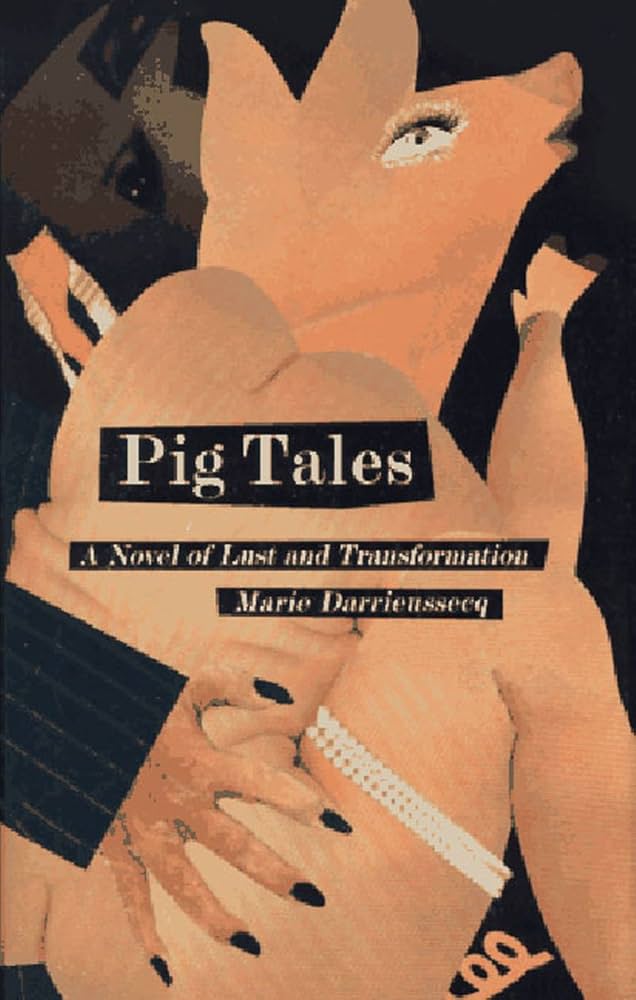
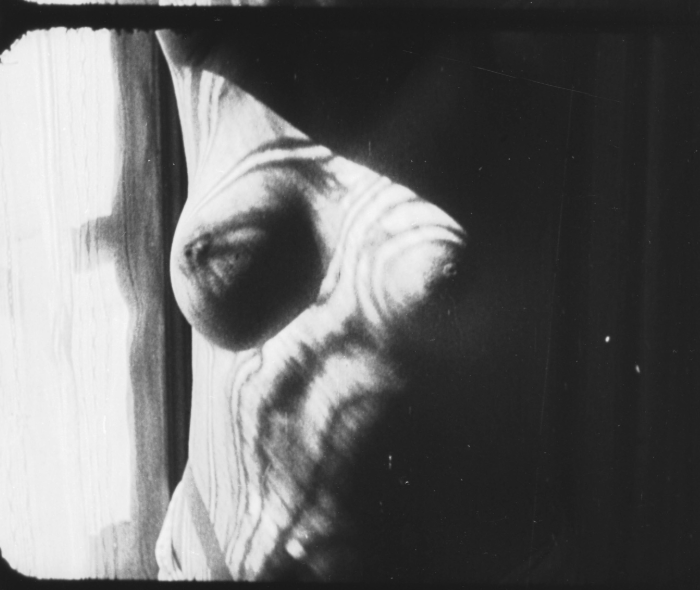




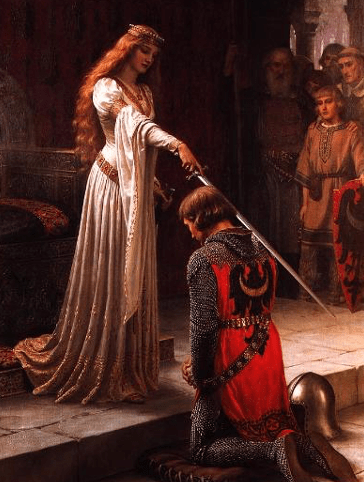
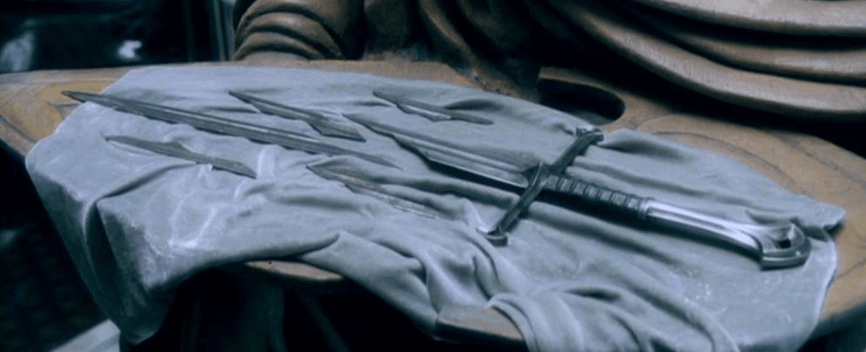


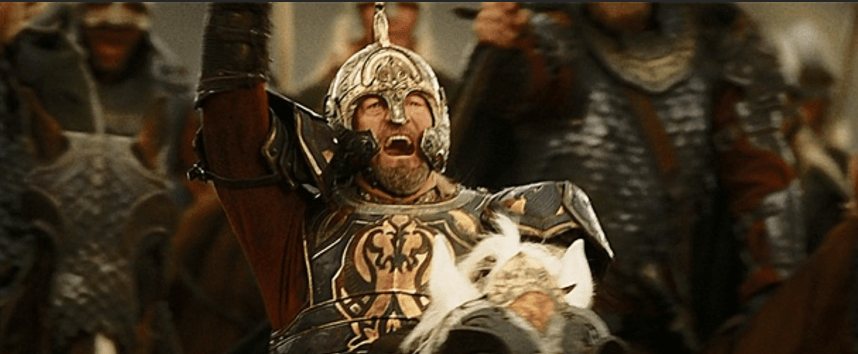


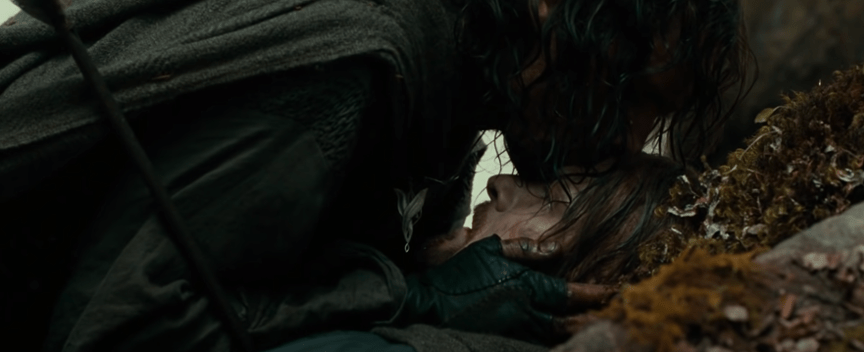
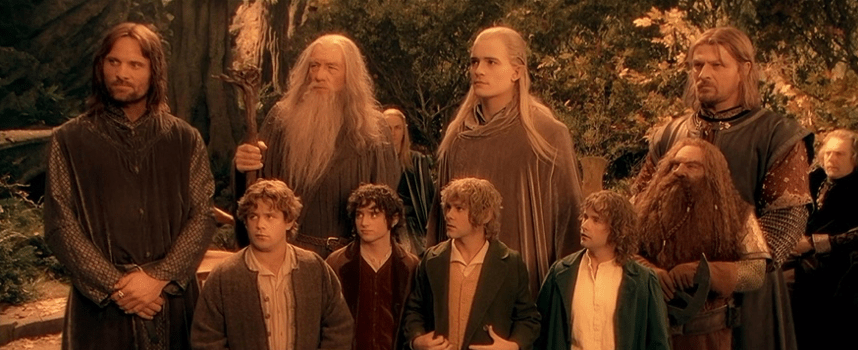

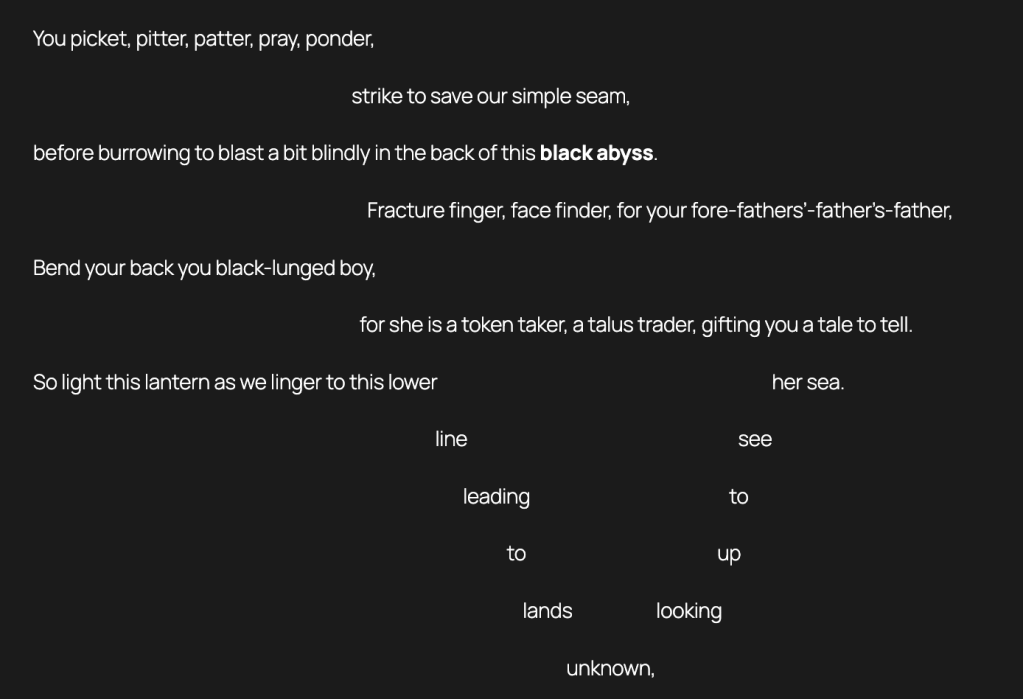




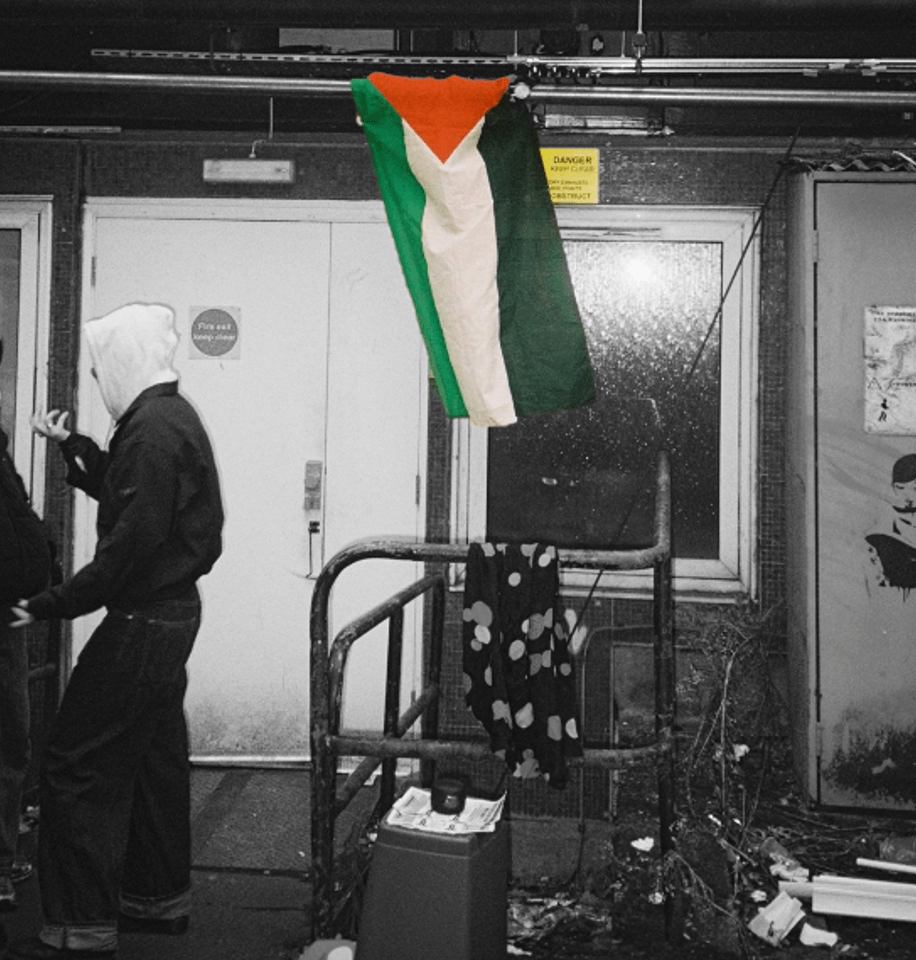


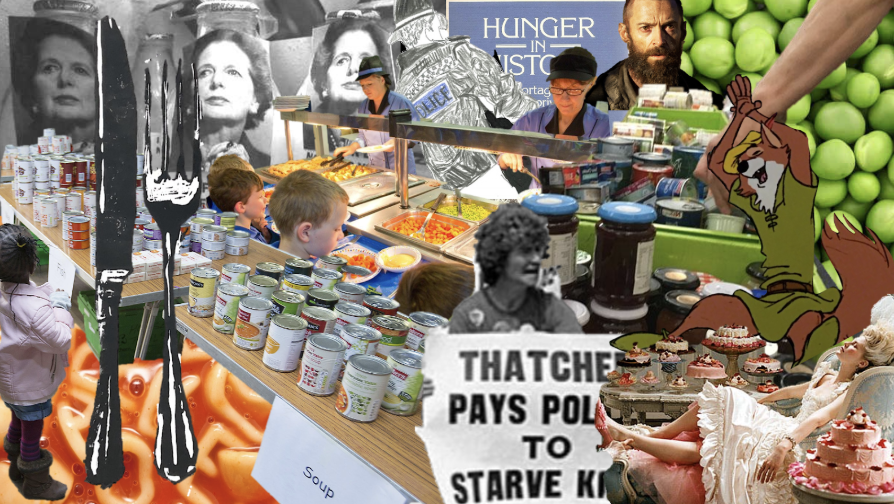



 Swan Soul Stories